Fashion districts and personal style in Copenhagen
Copenhagen is best explored through its distinct fashion districts: the central reach of Strøget, the focused boutiques around Kronprinsensgade, and the more neighbourhood-led shopping of Nørrebro and Vesterbro. This guide explains how to read those differences, plan a thoughtful shopping walk and connect Danish fashion with the wider culture of design.
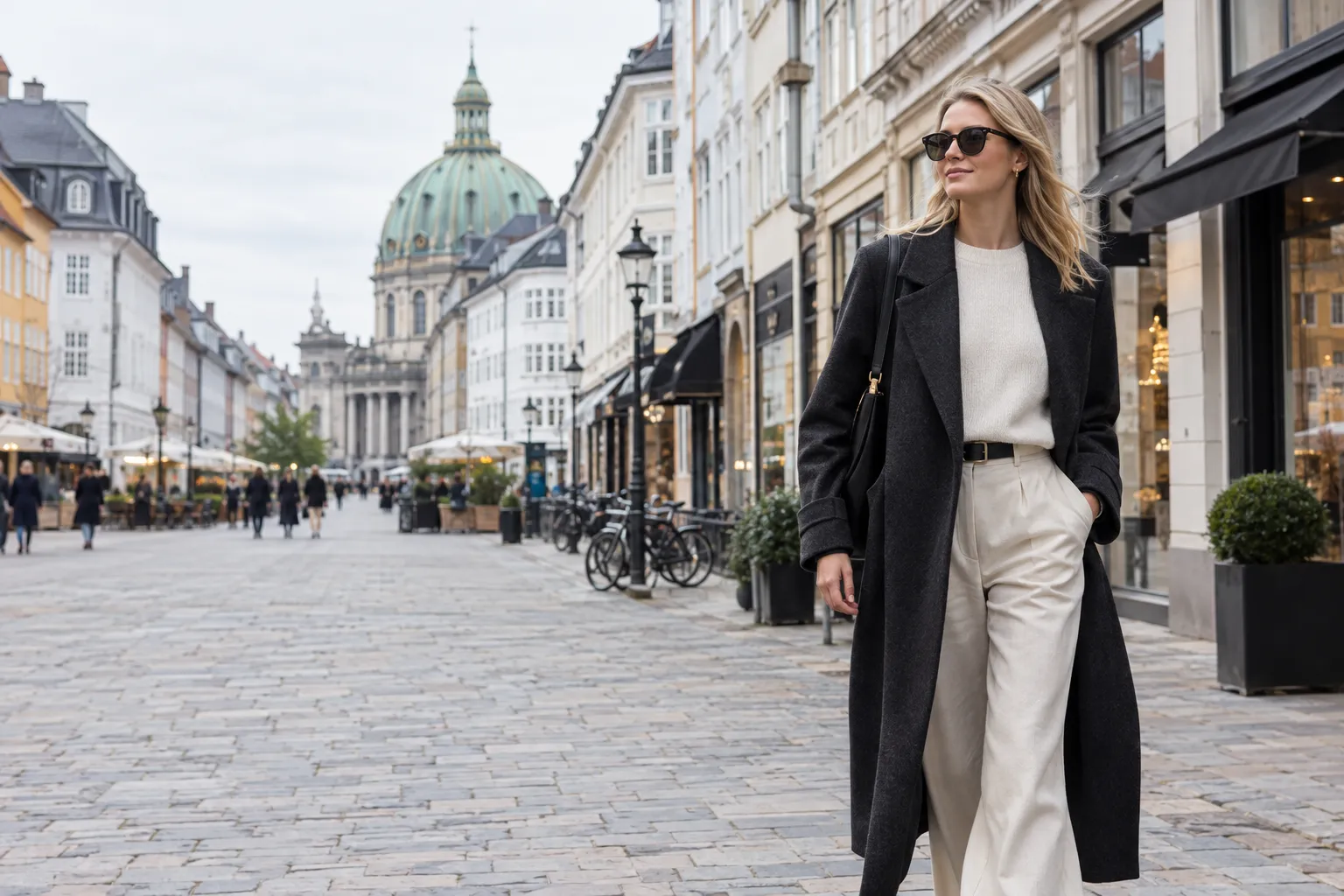
Copenhagen fashion districts at a glance
Explore Strøget for a broad central shopping mix and nearby sights.
Visit Kronprinsensgade for a focused fashion-street experience, with Silkegade nearby for related shopping streetscape browsing.
- Length of Strøget between City Hall Square and Kongens Nytorv
- 1.1 km
- Identified by Visit Copenhagen as the city’s fashion street
- Kronprinsensgade
- Listed run of Designmuseum Danmark’s Henrik Vibskov exhibition
- 18 Sep 2026–21 Feb 2027
- Neighbourhoods noted for smaller specialist, independent or curated shopping
- Nørrebro and Vesterbro
Fashion districts and personal style in Copenhagen
Copenhagen rewards a slower, area-by-area approach. The city’s fashion districts offer different scales and atmospheres, making the choice of neighbourhood as important as the choice of shop.
Copenhagen style is a neighbourhood experience
Copenhagen’s style is easiest to understand as a collection of neighbourhoods rather than a single shopping quarter. The central streets bring international labels, Danish design names and familiar high-street options into a compact walk. A few turns away, smaller shops and specialist businesses change the pace. In Nørrebro and Vesterbro, shopping is more closely woven into the experience of exploring a neighbourhood; in the centre, the concentration of stores makes comparison and browsing straightforward.
For a visitor, this distinction matters. A day spent moving rapidly from shop to shop can make the city feel interchangeable with any other retail destination. A more rewarding approach is to choose one area, notice how its streets and shops relate to one another, and leave time to pause. The aim is not to assemble a complete wardrobe in a day, but to see how Copenhagen’s fashion offer sits alongside design, food, architecture and everyday city life.
Personal style is part of the appeal. Rather than treating “Danish style” as a fixed uniform, look for the choices that recur across different settings: considered proportions, useful layers and a willingness to mix familiar pieces with more individual details. These are observations, not rules. The city’s shops range from international brands to independent and specialist offers, so a visitor can use the districts to find a personal point of entry rather than imitate a prescribed look.
A useful way to plan a fashion day
A useful day begins with a loose plan, not a rigid checklist. Start with the central area if you want to understand the city’s main shopping axis, then decide whether to follow the smaller streets nearby or spend a later stretch of the day in Nørrebro or Vesterbro. Visit Copenhagen’s shopping guide distinguishes the city centre’s high-end fashion and major high-street brands from the smaller speciality shops associated with Nørrebro and Vesterbro. That contrast gives the visitor a simple way to choose: central Copenhagen for range and concentration, neighbourhood districts for a more local-feeling browse.
Strøget and the central streets
The city centre is a convenient starting point, with a clear main route and nearby streets that invite a more exploratory pace.
Strøget: the central shopping spine
Strøget is the most practical introduction to central shopping. Visit Copenhagen describes it as a 1.1-kilometre shopping stretch running between City Hall Square and Kongens Nytorv. Its mix includes designer and budget brands, and the route’s side streets connect shopping with notable city sights, including Helligåndskirken, the Stork Fountain and Christiansborg Palace. This is a useful setting for visitors who want to combine browsing with a first orientation to central Copenhagen.
The main pedestrian street is best treated as a spine, not the whole experience. Move along it to understand the broad retail offer, then allow time to turn into side streets when a shopfront or a quieter stretch catches your eye. The contrast between the principal route and its adjoining streets makes the area more legible: larger brands and busier footfall on the main axis, with smaller moments of discovery just off it. The precise mix of shops can change, so check current store information if a particular destination is central to your plans.
Strøget also makes a good opening chapter for a personal-style walk. Instead of shopping by category alone, notice the silhouettes and materials that catch your attention. Compare how a carefully cut coat, an everyday knit and a sharper accessory might work together. The city centre’s range makes that kind of visual editing possible, even when you are not intending to buy. Keep the walk flexible; the pleasure lies in making considered choices, not in covering every block.
- Begin at either City Hall Square or Kongens Nytorv and walk the 1.1-kilometre route at an unhurried pace.
- Use the side streets to break up the main shopping stretch and take in nearby sights.
- Check individual retailers’ current opening information before travelling specifically to one shop.
Turn a shopping street into a considered walk
A good central itinerary can balance retail with observation. The Stork Fountain and Helligåndskirken are among the sights identified along the Strøget area, while Christiansborg Palace is another nearby point of interest noted by the city guide. These landmarks offer natural pauses and make the walk more than a sequence of shop visits. They also help visitors keep a sense of direction while moving between the main street and its side lanes.
If your interest is fashion rather than general shopping, choose a few stores or streets that fit your taste and give them attention. A short, edited list is usually more useful than a long route that leaves little time to look closely. Strøget’s breadth is an advantage when you are still discovering what you like; its side streets become more valuable once you want to refine the search.
Kronprinsensgade and nearby Silkegade
A small cluster of streets can offer a more deliberate way to explore fashion, without trying to represent the whole city.
Kronprinsensgade: a focused fashion address
Kronprinsensgade has a more concentrated identity than the broad central shopping route. Visit Copenhagen calls it Copenhagen’s fashion street and names designers located there, making it a natural destination for readers seeking a fashion-led rather than general retail walk. The official guide also points to nearby Silkegade for related shopping. Together, these streets offer a focused alternative to browsing the full length of Strøget.
The value of a designated fashion street is not simply the possibility of finding a particular label. It creates an opportunity to compare a small group of fashion businesses in a compact setting and to notice differences in design language. Look at how each shop presents colour, texture and shape; consider whether a garment feels suited to daily use or to a more deliberate occasion. Those observations can be useful even when you leave without a purchase.
Allow room for discovery, but verify details before setting out for an individual shop. Retail locations, opening hours and stock are subject to change, and the city’s general destination guide is not a live directory of every store’s current arrangements. If you have one specific label in mind, consult that retailer’s current information separately. Otherwise, treat Kronprinsensgade and Silkegade as a small-area exploration rather than a guaranteed list of open destinations.
- Choose Kronprinsensgade when you want a compact fashion-focused walk.
- Include nearby Silkegade if you want to extend the browse to related shopping streets.
- Confirm a named store’s current address and opening arrangements before making a dedicated trip.
How to browse with intention
A focused district can make personal shopping feel less hurried. Decide what you are looking for before entering a shop, but keep the brief open enough to allow an unexpected find. For example, a search for a versatile layer can lead to useful comparisons in cut and fabric; a search for a single accessory can clarify how much contrast or colour you want in an outfit. The point is to use the street as a setting for informed choices, not to approach every shop with the same checklist.
Nørrebro and Vesterbro at a slower pace
The city’s neighbourhood shopping offers a more dispersed, less uniform counterpoint to the central retail streets.
Nørrebro and Vesterbro: independent perspectives
Nørrebro and Vesterbro bring a different rhythm to a Copenhagen fashion itinerary. Visit Copenhagen’s shopping guide identifies smaller specialty shops in both districts, and describes independent fashion and design shopping in Nørrebro alongside curated, indie options in Vesterbro. This gives visitors a reason to look beyond the central shopping streets when they are interested in more individual retail settings.
Think of these areas as neighbourhoods to explore, not as interchangeable “alternative” shopping zones. The useful distinction is practical: they offer a different scale of browsing from the central concentration of larger and high-street brands. Take time to walk between likely stops, notice the surrounding streets and allow the day to be shaped by what you find. A shop is part of the neighbourhood experience, not necessarily the entire reason to visit it.
Because a district-wide guide cannot guarantee that a particular shop is open or still located where expected, check current details for any named destination. If you do not have a particular shop in mind, keep the route adaptable. A flexible plan lets you discover a mix of fashion and design businesses while avoiding the pressure to treat a neighbourhood as a fixed retail itinerary.
- Choose Nørrebro for a browse that includes independent fashion and design options.
- Consider Vesterbro for smaller, curated and indie shopping choices.
- Allow time to explore the surrounding neighbourhood rather than moving directly between shop addresses.
Use neighbourhood browsing to refine your eye
These neighbourhood visits can also sharpen a visitor’s sense of personal style. In a smaller or more independent retail setting, it is easier to think about what distinguishes one choice from another: a relaxed cut, an unusual detail, a practical fabric or a more expressive colour. Use those observations to build a vocabulary for your own preferences. You do not need to attach a national label to every design choice; it is enough to recognise what feels useful, comfortable and individual to you.
Personal style for a day in Copenhagen
A thoughtful outfit is not a costume for a city. It is a practical expression of the way you want to move through it.
Build a practical Copenhagen wardrobe
Personal style is most useful when it works in real conditions. Copenhagen is a city to experience on foot, so think about comfort and layering when planning a day of shopping and walking. Choose clothing that allows movement and can adapt to changes in setting, from a busy central street to a quieter café or gallery visit. This is practical advice rather than a claim about what residents wear: the best outfit for a visitor is one that supports the day they have planned.
Begin with a small set of pieces that work together. A coat or jacket can anchor the look; a knit or shirt can provide a layer; comfortable footwear matters when your route includes long stretches of pavement. Add one or two details that make the combination feel personal, rather than packing several items that all perform the same role. When shopping, consider whether a new piece can work with more than one outfit and whether its fabric and cut suit your actual routine.
A restrained palette can make mixing easier, but it need not mean avoiding colour or pattern. Instead, decide where you want the visual emphasis to sit. One distinctive accessory or a strong outer layer may be enough to make a simple outfit feel intentional. This kind of editing also makes it easier to judge purchases in context, since you can imagine how a piece fits with clothing you already own.
The district plan can support this way of dressing. A central route may suit a day when you want to compare a broad range of stores; neighbourhood browsing works well when you prefer a looser schedule. In either case, set aside time to sit down and review what you have seen. A pause helps separate a passing impulse from an item that genuinely suits your wardrobe.
- Dress for walking and use layers that can be adjusted through the day.
- Choose comfortable footwear suited to a route with substantial time outdoors.
- Before buying, consider how a piece works with clothing you already wear.
Shop with a clear sense of your own style
Style is also a matter of attention. Notice how a garment hangs, how a fabric feels and whether a detail earns its place. Consider whether you are drawn to clean lines, expressive colour or subtle texture, then look for those qualities across different shops and districts. This turns a shopping day into a way of learning your own preferences, even if you make no purchase.
A useful personal-style note can be simple: the fit you prefer, the layers you reach for most, and the colours that work together in your existing wardrobe. Keep those observations in mind while browsing. They help you recognise a meaningful find without turning shopping into an exercise in buying more.
Fashion as design at Designmuseum Danmark
A museum visit can deepen the experience of fashion shopping by bringing attention to craft, form and cultural references.
Designmuseum Danmark and the ideas behind fashion
Fashion in Copenhagen can be understood through the wider language of design. Designmuseum Danmark gives visitors a way to consider clothing not only as something to wear, but also as material, construction, image and cultural expression. Its current exhibition, “Henrik Vibskov: The exhibition”, is listed by the museum as running from 18 September 2026 to 21 February 2027. The museum presents Vibskov’s work across fashion, music, art, costumes and installations, offering a broader context for visitors interested in how fashion crosses into other creative fields.
The exhibition is a useful counterpoint to a shopping itinerary. It encourages attention to the ideas behind clothing and presentation, which can make later browsing more perceptive. Consider how fabric, silhouette or staging affects your reading of a garment. Then carry that curiosity back to the streets: shops become places to notice design choices rather than only places to purchase things.
Exhibition dates and visitor arrangements can change. Before visiting, consult Designmuseum Danmark’s official page for current access, opening details and any practical information. This guide does not assume admission arrangements or opening hours. For a day combining museum and shopping, leave enough flexibility to account for the museum’s current schedule and the time needed to move between activities.
- Use the museum exhibition to explore fashion in relation to art, music, costume and installation.
- Check Designmuseum Danmark’s official visitor information before planning a visit.
- Treat the museum as cultural context for the shopping day, rather than as a substitute for exploring the districts.
Check current museum details before you go
The exhibition’s stated dates make it a time-sensitive part of this guide. As of 1 November 2026, the listed run continues until 21 February 2027, but visitors should verify the current museum listing before making plans. A careful itinerary allows cultural visits and shop browsing to complement one another without assuming that a venue’s arrangements remain unchanged.
How to make the districts work together
A little preparation makes the day smoother, while a deliberately open schedule leaves room for the most interesting discoveries.
- Plan a thoughtful fashion itinerary
For a first visit, begin in the centre and use Strøget to understand the breadth of the shopping offer. Add Kronprinsensgade if fashion is your principal interest, and use the side streets to keep the route varied. For a second outing, choose either Nørrebro or Vesterbro and give the neighbourhood enough time to feel distinct. These are planning frameworks, not fixed itineraries: the best sequence depends on the shops you want to see and the time you have available.
A useful preparation is to identify a small number of priorities. Save current store details, check the day’s opening arrangements and note any museum visit that has a date-sensitive exhibition. Keep the remainder of the plan open. This makes it easier to adapt if a shop is closed, a street is busier than expected or you decide that an unplanned detour is more appealing.
If several districts are part of one day, be realistic about how much browsing you can do. Trying to cover the centre, Nørrebro and Vesterbro in a hurried sequence can reduce the experience to transit between addresses. A more considered plan pairs one principal shopping area with one complementary stop, then leaves space for meals and rest. The neighbourhoods are most rewarding when you have time to notice their differences.
Visitors arriving from London or elsewhere in the United Kingdom may need to arrange separate transport for their Copenhagen visit. UK Direct Chauffeurs provides pre-booked chauffeur transport in London and across the United Kingdom; Copenhagen is outside that stated UK coverage. For travel within Copenhagen, consult current local transport information rather than assuming that a UK-based service operates there.
- For a first day, combine central browsing with one focused fashion-street visit.
- For a second outing, choose Nørrebro or Vesterbro rather than trying to cover both quickly.
- Verify current shop and museum details, then leave time for unplanned discoveries.
- A considered conclusion
The most satisfying Copenhagen fashion day is not necessarily the one with the most stops. It is the one that gives you a clearer impression of the city and of your own taste. A central walk offers range; Kronprinsensgade narrows the focus; Nørrebro and Vesterbro bring a neighbourhood perspective; the museum adds cultural depth. Choose the combination that fits your interests, and let the streets themselves set the pace.
At the end of the day, take stock of what you noticed rather than only what you bought. Perhaps a particular cut felt more versatile, or a colour combination seemed easier to wear than expected. Those observations are portable. They turn a visit to Copenhagen into a more personal encounter with fashion, design and the everyday choices that shape style.
Copenhagen fashion districts FAQs
Which Copenhagen area is best for fashion shopping?
It depends on the kind of browse you want. Strøget and the centre offer a broad mix, Kronprinsensgade is identified as a fashion street, while Nørrebro and Vesterbro are noted for smaller, independent or specialist options.
How long is Strøget?
Visit Copenhagen describes Strøget as a 1.1-kilometre shopping stretch between City Hall Square and Kongens Nytorv.
What is the Henrik Vibskov exhibition at Designmuseum Danmark?
The museum describes the exhibition as presenting Henrik Vibskov’s work across fashion, music, art, costumes and installations. Its listed run is 18 September 2026 to 21 February 2027; check the museum’s official page for current visitor information.
Should I check shop opening hours before visiting?
Yes. Retail locations and opening arrangements can change, so confirm details with the individual shop before making a dedicated trip.
Sources and references
Explore Copenhagen at street level
Explore Copenhagen at street level Related information and services: All Airports We Cover In London, Our Full Chauffeur Services Overview, London City Airport Chauffeur Service.
Article reviewed and updated November 1, 2026.
UK Direct Chauffeurs