Antiques and collecting culture in Aarhus
Explore Aarhus through the objects its markets make available, the secondhand pieces that continue everyday lives, and the museum collections that place material culture in historical context. This guide considers how to browse thoughtfully, what to look for and how to plan around current venue information.
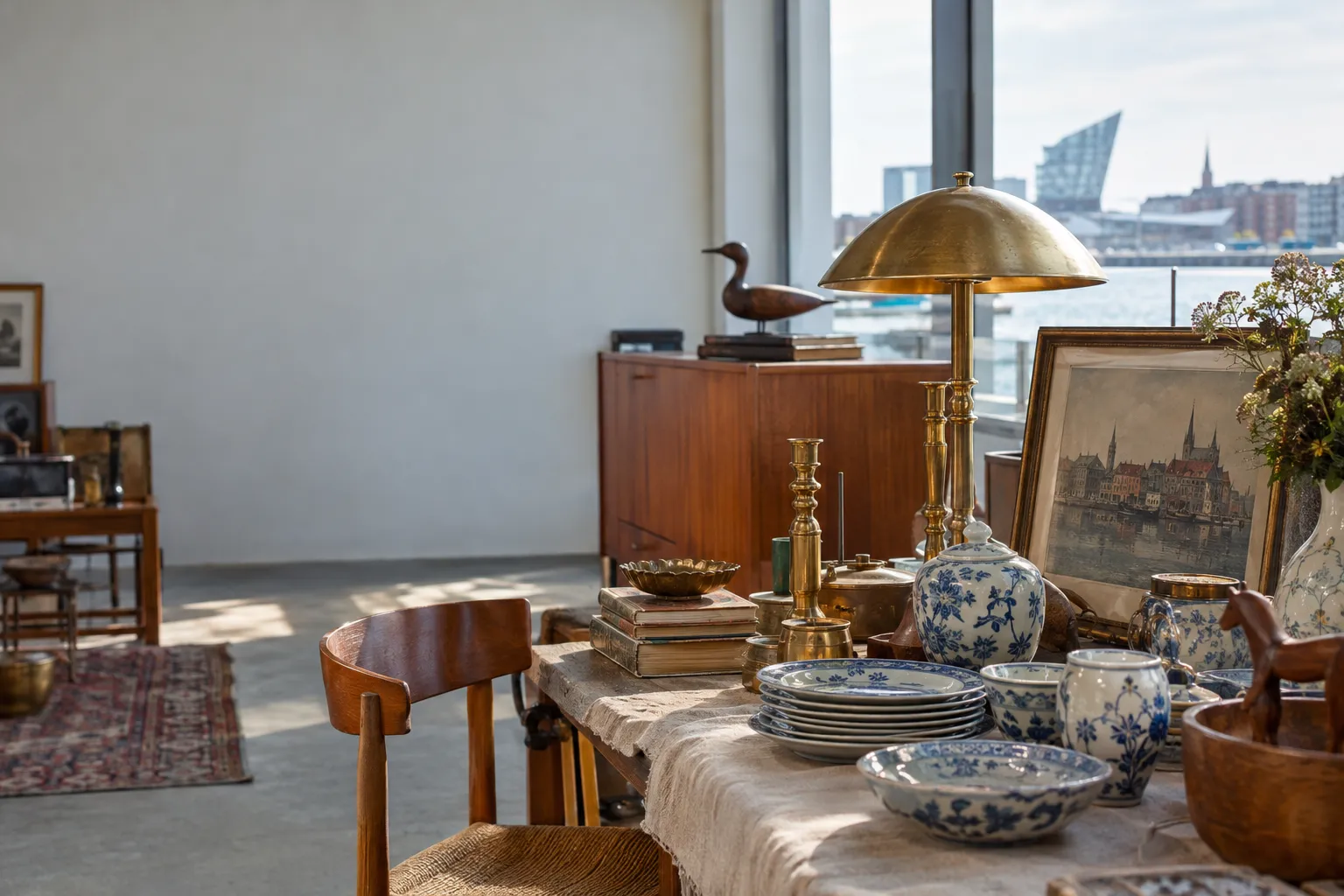
What is Aarhus collecting culture?
Aarhus collecting culture brings together flea markets, secondhand shops and museum collections.
VisitAarhus lists markets with vintage clothing, furniture, Danish design and handicrafts, and identifies Loppehuset in Højbjerg as an indoor flea market with varied object categories.
- Loppehuset’s listed location
- Højbjerg
- Categories listed for Loppehuset
- Antiques, porcelain, lamps, pictures and furniture
- Period span of Den Gamle By’s reconstructed neighbourhoods
- 17th century to the present
- Examples in Den Gamle By’s museum display
- Archaeological finds, textiles and old local pottery
A city seen through its objects
Aarhus is best approached as a varied collecting landscape, where flea-market browsing, secondhand finds and museum interpretation illuminate different relationships with objects.
Aarhus collecting culture: an introduction
Aarhus rewards the collector who is interested not only in what an object is, but in how it has travelled through ordinary life. A piece of porcelain, a modest lamp or a worn book can be approached as a design choice, a household possession or evidence of changing taste. The city’s collecting culture gives room to all three readings. It connects market browsing and secondhand shopping with the more deliberate work of preserving and interpreting objects in museums.
That range makes Aarhus a satisfying place to explore without treating the hunt as a checklist. VisitAarhus describes a market scene that includes vintage clothing, furniture, Danish design, handicrafts and flea markets. Meanwhile, Den Gamle By’s museum collections and reconstructed streets place material things within the settings of domestic and regional history. These are different experiences, but both ask visitors to look closely: at construction, use, style and the small marks that distinguish one object from another.
For a visitor, the most useful distinction is between acquiring something and learning to read it. A market may offer the pleasure of chance and a possible purchase; a museum can provide context and a sense of how objects are selected, preserved and displayed. Taken together, the two make collecting in Aarhus less about filling a bag and more about noticing how things shape a place.
Markets, chance finds and the pleasure of looking
Aarhus’s market offer is varied rather than limited to a single definition of “antique”. The VisitAarhus guide brings together flea markets and markets where visitors may encounter vintage clothing, furniture, Danish design and handicrafts. That breadth matters: collecting is often a personal practice, and one person’s interest may begin with a particular material, period, maker or everyday function rather than a formal category.
The city guide names settings including Ingerslevs Boulevard, Bispetorv and Godsbanen, as well as Loppehuset. These names suggest different kinds of browsing opportunities, but market formats and dates can vary. Before planning around a particular market, consult the current VisitAarhus information and the organiser’s own notices where available. A listing should not be taken as confirmation that a market takes place on a chosen day.
Approach the market as a place to observe as much as to buy. Look at how objects are grouped, which forms recur and how sellers describe their pieces. A cluster of ceramics, for example, may prompt questions about glaze, pattern and intended use; a piece of furniture invites attention to joinery, wear and repair. Even when nothing comes home, this kind of comparison builds a more discerning eye.
Markets also put collecting in a social setting. Objects pass between owners, and conversations can reveal why a thing has been kept or brought to market. Treat such accounts as useful clues rather than verified provenance unless documentation supports them. For valuable or specialist purchases, provenance, condition and authenticity require careful assessment beyond a casual stall-side description.
Loppehuset: a considered approach to browsing
Loppehuset Aarhus, in Højbjerg, is identified by VisitAarhus as an indoor flea market. Its listing describes categories that include antiques, porcelain, lamps, pictures, clothing and furniture. This mix makes it a practical stop for visitors whose interests range across decorative objects and functional household pieces, rather than a narrowly defined period or collecting field.
Indoor browsing has its own rhythm. It allows a visitor to compare objects across stalls and categories without relying on a single outdoor event. Still, the market is not a catalogue: stock changes, and a listing of categories cannot guarantee that a particular object will be available. Go with a small number of questions in mind instead of a fixed shopping list. What materials do you collect? Which dimensions will work at home? Are you seeking an object to use, or one to study and preserve?
A measured inspection is especially useful for fragile or older pieces. Check for chips, cracks, repairs, loose fittings and signs of alteration. For furniture, consider stability and whether the object can be transported safely. Ask the seller what is known about an item’s age and history, and distinguish an informed description from documentary evidence. If a claim about a maker or period is central to the purchase, seek independent expertise before committing.
VisitAarhus’s market listing gives practical information, but opening arrangements can change. Check current details directly before setting out, particularly if Loppehuset is the main purpose of the day. Avoid assuming that a general weekly pattern applies on a particular date.
Secondhand objects and everyday collecting
Secondhand shopping sits close to antiques collecting, but it is not quite the same pursuit. A piece may be valued for its design, usefulness or story without being old or rare. VisitAarhus’s listing for Danmission Secondhand in Aarhus describes changing stock that includes books, glassware, tableware and home accessories. That range gives the everyday object a place in the collecting picture: a set of glasses or a well-used book may be worth keeping because it suits a home or captures a taste, not because it commands a specialist price.
The changing nature of secondhand stock is part of the appeal. It encourages a slower, more open-ended visit and makes repeat browsing potentially rewarding, although no particular item can be expected to be in stock. Consider whether you are looking for a single useful object, a material to collect, or a visual reference for a wider interest. Clear criteria can help prevent impulse purchases that do not fit your collection.
For household objects, practicality and condition matter as much as appearance. Check that tableware is intact and appropriate for its intended use; look for visible damage to glass; and inspect books for completeness and condition. If an object will be used regularly, ask whether it can be cleaned or repaired in a way that suits its material. A sound purchase is not always the rarest one: it may simply be the object that will continue to be appreciated and cared for.
The distinction between secondhand and antique should remain clear. A secondhand shop can be a source of older objects, but age alone does not establish an object’s rarity, attribution or value. Treat labels and descriptions as starting points, and seek specialist advice where a purchase depends on those claims.
Den Gamle By: objects within historic life
Den Gamle By offers a complementary way to think about collecting: not as a hunt for a single object, but as an encounter with objects in the contexts of streets, homes, shops and workshops. Its official visitor information describes reconstructed neighbourhoods spanning the 17th century to the present. This is not a marketplace, and visitors should not approach it expecting to buy historic objects. Its value for a collector is interpretive: it lets material things be understood as part of lived environments.
Domestic settings change how an object reads. A chair, tool or household fitting placed within a period interior is easier to consider in relation to use, other furnishings and the habits of a household. The setting gives a sense of scale and function that a display case or isolated market stall cannot provide. For collectors of furniture, ceramics, textiles or domestic design, this kind of observation can sharpen questions to bring back to the market: how was an object used, what would have sat alongside it, and what signs of use are meaningful rather than merely attractive?
Den Gamle By’s museum display presents regional history through objects ranging from archaeological finds to textiles and old local pottery. The museum also notes that its display cases date from an exhibition opened in 1926. That detail points to another layer of collecting culture: displays themselves have histories, and the way objects are arranged can reveal changing ideas about what deserves preservation and how a region tells its story.
Allow time for interpretation rather than moving through the museum as if it were a set of props. Compare the curated displays with the reconstructed environments, and notice how the same kind of object can serve different purposes in different settings. For opening arrangements, admission and visit planning, consult Den Gamle By’s current official visitor pages before travelling.
How markets and museums deepen one another
The market and museum perspectives work best when they are not collapsed into one another. Markets offer the possibility of ownership, personal choice and discovery; museums make selection, preservation and interpretation visible. One is not inherently more authentic than the other. A market object carries its own material history, but its story may be incomplete. A museum object is presented with curatorial framing, which helps explain its significance while also shaping what the visitor sees.
This difference offers a useful framework for a day in Aarhus. Begin with the question you most want to explore. If you are drawn to furniture or decorative objects, a market visit may give you direct opportunities to compare form and condition. If you want to understand how objects relate to regional or domestic history, Den Gamle By provides a historical setting and museum interpretation. A secondhand shop can add a more everyday dimension, where practical use and personal taste take precedence over claims of age or rarity.
Keep a few notes as you go. Record a maker’s mark or a distinctive material, photograph an object only where photography is permitted, and jot down questions that cannot be answered on the spot. The aim is not to turn a leisurely visit into research work, but to make observations useful later. Comparing notes across different settings can help distinguish a preference for a particular look from an interest in a specific period, technique or use.
If you are considering a purchase, make room for restraint. Ask whether the object has a clear place in your collection or home, whether it can be cared for appropriately and whether the price reflects evidence rather than an appealing story. Collecting becomes more rewarding when curiosity is allowed to be selective.
Visiting Aarhus with a collector’s eye
Use current venue information for practical arrangements, then let personal curiosity guide the order of a visit. Market and museum experiences have different purposes and should be planned accordingly.
A practical collector’s checklist
A little preparation makes an exploratory visit more rewarding. Start by deciding whether the day is about a particular collecting interest or about discovering what draws your attention. In the first case, research basic characteristics of the objects you collect: common materials, construction details, makers’ marks and typical forms. In the second, give yourself permission to browse broadly, but set a practical limit on what you can carry and care for.
Check current information for any market or shop you intend to visit. Market dates, opening hours and stock are not fixed simply because a destination guide names a venue. VisitAarhus’s guide to markets and flea markets is a useful starting point, while venue information should be checked again close to the intended visit. Den Gamle By publishes its own tickets and opening information; consult that official page for current arrangements and allow time appropriate to the visit you have planned.
A simple inspection routine helps keep enthusiasm grounded. First, look at the object as a whole: proportions, balance and general condition. Then examine areas likely to show wear or repair, such as edges, joints, handles, hinges and bases. Ask what the seller knows and whether any documentation accompanies the object. For anything that is costly, fragile or described as a notable attribution, pause and obtain independent advice rather than relying on a quick impression.
Finally, think about transport and care before buying. A fragile piece needs suitable packing, while furniture requires an honest assessment of dimensions and moving arrangements. The best find is not necessarily the one that is hardest to locate; it is one whose history, condition and place in your collection you understand.
- Check current opening and event information before travelling.
- Decide what you collect, or choose to browse without a fixed purchase target.
- Inspect condition, repairs, materials and identifying marks.
- Treat undocumented provenance or age claims as unverified.
- Consider packing, transport, storage and care before buying.
Collecting as a practice of attention
Collecting is often described in terms of acquisition, but discernment may be its more durable pleasure. Aarhus offers useful contrasts: objects available for purchase in markets and secondhand shops; objects protected and interpreted in museum displays; and objects situated in domestic and commercial environments at Den Gamle By. Each context invites a different kind of attention.
A strong collection does not need to be large or expensive. It may take shape around a material, a function, a visual preference or a personal connection. A collector of tableware might pay attention to handling and pattern; someone interested in furniture might focus on construction and proportion; another visitor may simply be drawn to books or objects that remain useful. Such a point of view turns browsing into a form of learning, because each encounter can refine what matters.
The city’s appeal lies partly in allowing those interests to remain open. A market visit can lead to questions that a museum helps frame; a museum display can send a visitor back to a market with a more precise eye. Secondhand shops bring the focus back to ordinary use and the ongoing life of household objects. This is not a promise of a particular find. It is an invitation to develop attention across several settings.
Leave space in the itinerary for looking without buying. The object you remember may be one you did not take home: a detail of workmanship, a display arrangement or a pattern that later helps you recognise what you value. In Aarhus, collecting culture is as much about that cultivated attention as it is about ownership.
Making a visit work
Make a flexible plan based on current opening arrangements and treat each setting on its own terms: shopping is not museum access, and museum displays are not retail.
Building a thoughtful day around collections
A day centred on objects need not be over-programmed. One considered approach is to begin with a market or secondhand stop, when attention is fresh, and reserve time for a museum visit as a separate experience. Alternatively, make Den Gamle By the anchor and use a market visit to explore how present-day collecting differs from curated regional history. The right order depends on opening arrangements and the specific dates of your visit, so verify those details before setting a sequence.
Keep geographical movement realistic by checking locations and current transport information rather than assuming that all stops are close together. Loppehuset is in Højbjerg; the city guide also names market settings such as Ingerslevs Boulevard, Bispetorv and Godsbanen. Exact routes, event dates and transit arrangements are not established by the cultural listings alone. Use current local information to plan each leg and allow enough time for browsing and observation.
UK Direct Chauffeurs is a London-based chauffeur service, and its confirmed coverage does not establish service in Aarhus. For that reason, it is not a local transport recommendation for this itinerary. Visitors should arrange local transport through current, reliable destination information and confirm suitability for their own plans.
After the find: records, transport and care
When travelling with a purchase, protect the object’s condition. Ask the seller how it should be packed, particularly if it is made from glass, ceramic or another fragile material. Keep small pieces secure and avoid placing heavy items on top of them. For furniture or larger purchases, confirm dimensions and decide on transport before completing the sale; do not assume that a seller or venue provides delivery.
At home, record what you know while the details are fresh. Note where and when you acquired the object, the seller’s description and any marks or documents that accompany it. Separate observed facts from claims: “small chip at the rim” is an observation, while “made in a named workshop” needs evidence. This simple habit gives your collection a more reliable record and makes future care or research easier.
Care should suit the material. Avoid aggressive cleaning when the finish, glaze or textile is uncertain, and seek specialist advice for fragile, valuable or technically complex objects. A clean appearance is not always the right goal; historic surfaces and signs of use may contribute to an object’s character. Preservation begins with understanding what the object is made of and what changes would be difficult to reverse.
These habits apply whether an item is described as an antique, vintage or simply secondhand. The labels are not substitutes for condition assessment or provenance. In a thoughtful collection, the object’s story is best represented with honesty about what is known and what remains uncertain.
A considered conclusion: collecting in Aarhus
Aarhus’s collecting culture is not defined by a single shop, market or historical period. It is a set of encounters: browsing among antiques and household pieces, finding objects through secondhand retail, and seeing material culture interpreted in a museum or placed within a reconstructed historic setting. That variety gives visitors more than one way to engage, whether their interest is scholarly, aesthetic or simply personal.
The most rewarding approach is curious but exacting. Ask what an object does, how it is made and what evidence supports its story. Notice the distinction between a thing’s age and its significance, between a seller’s description and documented provenance, and between the intimacy of owning an object and the broader context offered by a museum. These distinctions make collecting more informed without making it less pleasurable.
Plan around confirmed, current information; leave room for the unexpected; and resist the pressure to make every visit produce a purchase. Aarhus offers ample reason to look closely. A market stall, a secondhand shelf and a museum display can each change how an ordinary object appears. Sometimes the most lasting acquisition is a more attentive way of seeing.
Antiques and collecting in Aarhus: FAQs
A few distinctions help set expectations: listings are not guarantees of stock or event dates, and museum interpretation is different from buying an object.
A few useful answers
These concise answers address practical questions that arise when planning an antiques and collecting visit in Aarhus. Market listings and museum arrangements can change, so use the official destination or venue page for date-specific details.
Where can I explore flea markets in Aarhus?
VisitAarhus’s city guide describes the wider market scene, including vintage clothing, furniture, Danish design, handicrafts and flea markets. Individual market formats and dates vary, so check current information before travelling.
What kinds of objects are associated with Loppehuset?
VisitAarhus lists Loppehuset in Højbjerg as an indoor flea market with categories including antiques, porcelain, lamps, pictures, clothing and furniture. Stock and opening arrangements should be confirmed with current venue information.
Can I buy antiques at Den Gamle By?
Den Gamle By is a museum experience, not an antiques market. Its official visitor information describes reconstructed neighbourhoods, while its museum display presents regional-history objects including archaeological finds, textiles and old local pottery.
How should I judge an object’s age or provenance?
The best way to assess an object is to inspect its condition and construction, ask what is known about it, and distinguish seller descriptions from documentary evidence. For valuable or specialist pieces, seek independent expertise.
Are secondhand shops relevant to collectors?
Yes, but treat them as related rather than identical. VisitAarhus lists Danmission Secondhand in Aarhus with changing stock that includes books, glassware, tableware and home accessories. Secondhand status alone does not establish age, rarity or value.
The pleasure of looking well
Collecting in Aarhus is a practice of looking as much as acquiring: a meeting between personal taste, everyday objects and the histories museums choose to preserve.
Look closely, and leave room for discovery
Aarhus lends itself to a collector’s kind of attention: patient, alert to detail and comfortable with not knowing everything at first glance. Browse markets and secondhand shelves for the possibility of an object with a future in your home; visit museum settings to understand how objects can carry regional and domestic histories. Let the difference between those experiences deepen the visit. The point is not to find something at any cost, but to leave with a clearer sense of what you value and why.
A final note on planning
Before setting out, verify current listings and opening arrangements with VisitAarhus, the market or shop concerned, and Den Gamle By’s official visitor pages. Treat those sources as the authority for practical details on the date of your visit.
Aarhus antiques and collecting: overview
Aarhus brings together different kinds of engagement with objects, from the possibility of finding a piece to the study of material culture in a historical setting.
Overview
This overview brings together the main dimensions of Aarhus collecting culture: markets and secondhand browsing, historic settings, museum interpretation and practical habits for assessing finds. It is intended as a subject-led guide rather than a promise of particular stock, events or access.
Markets and secondhand shopping
Use the city’s market listings to understand the range of places and object categories, then check each destination’s current details. An exploratory visit can include vintage and household pieces without assuming every market will be operating on a chosen date or that a specific item will be available.
Museum context
Den Gamle By supplies the historical counterpoint, with reconstructed neighbourhoods and museum displays that place objects in context. Its role here is interpretive, not commercial; admission and opening arrangements should be checked through its official visitor information.
antiques and collecting in Aarhus FAQs
Where can I explore flea markets in Aarhus?
VisitAarhus’s city guide describes the wider market scene, including vintage clothing, furniture, Danish design, handicrafts and flea markets. Individual market formats and dates vary, so check current information before travelling.
What kinds of objects are associated with Loppehuset?
VisitAarhus lists Loppehuset in Højbjerg as an indoor flea market with categories including antiques, porcelain, lamps, pictures, clothing and furniture. Stock and opening arrangements should be confirmed with current venue information.
Can I buy antiques at Den Gamle By?
Den Gamle By is a museum experience, not an antiques market. Its official visitor information describes reconstructed neighbourhoods, while its museum display presents regional-history objects including archaeological finds, textiles and old local pottery.
How should I judge an object’s age or provenance?
The best way to assess an object is to inspect its condition and construction, ask what is known about it, and distinguish seller descriptions from documentary evidence. For valuable or specialist pieces, seek independent expertise.
Are secondhand shops relevant to collectors?
Yes, but treat them as related rather than identical. VisitAarhus lists Danmission Secondhand in Aarhus with changing stock that includes books, glassware, tableware and home accessories. Secondhand status alone does not establish age, rarity or value.
Sources and references
Let the objects tell more than one story
Let curiosity set the pace Related information and services: Event Chauffeur Hire Across The Uk, London City Airport Chauffeur Service, City to City Chauffeur, City to City Chauffeur Transfers UK.
Article reviewed and updated November 3, 2026.
UK Direct Chauffeurs