Fashion districts and personal style in Jakarta
Jakarta’s fashion scene is not one district with one look. It is a set of contrasting retail worlds, from Indonesian textiles and batik to the polished malls of the Thamrin corridor. Exploring those differences can help you understand the city’s clothing culture and find pieces that feel personal, wearable and connected to place.
At a glance
Sarinah is a starting point for Indonesian fashion and wastra, including batik, tenun and songket.
Thamrin City offers batik, traditional clothing and textile-related shopping according to Indonesia Travel’s venue guide.
- A Jakarta Tourism guide destination for Indonesian fashion and wastra
- Sarinah
- A shopping centre described by Indonesia Travel for batik, clothing and local crafts
- Thamrin City
- Official shopping directory lists fashion and lifestyle retailers
- Plaza Indonesia
- Official mall information describes East and West Malls linked by a skybridge
- Grand Indonesia
How Jakarta’s fashion districts shape the experience
The most rewarding way to explore fashion in Jakarta is to compare its different retail worlds and notice what each reveals about materials, design and the way people dress.
A city of distinct fashion settings
Jakarta’s fashion landscape is easier to understand as a series of different shopping environments than as one walkable fashion quarter. In central Jakarta, the Thamrin corridor brings together large malls with international and premium retail. Nearby, Sarinah gives Indonesian fashion and traditional textiles a prominent setting. Thamrin City offers another perspective, with batik, clothing and textile shopping within a large indoor complex. Farther afield, the city’s textile and clothing markets offer a different kind of browsing experience. These places are not interchangeable, and their appeal is not simply a question of price or polish. Each presents a different relationship between clothing, craft, retail and daily life.
Style begins with choosing how to look
For a visitor interested in personal style, that variety is the point. A single day might move from a carefully edited display of Indonesian design to a broad selection of cloth and garments, then to the sleek, climate-controlled environment of a major mall. The contrast can help clarify what you actually want to wear: a piece with a strong textile tradition, a contemporary silhouette, a considered accessory or simply a useful garment suited to Jakarta’s warm, humid climate. Approach the city as a place to look, compare and learn, rather than as a checklist of shops to complete.
Sarinah: Indonesian fashion and wastra
Sarinah is a helpful place to begin if you want to explore Indonesian fashion through textiles as well as finished clothing.
Sarinah and the contemporary life of Indonesian textiles
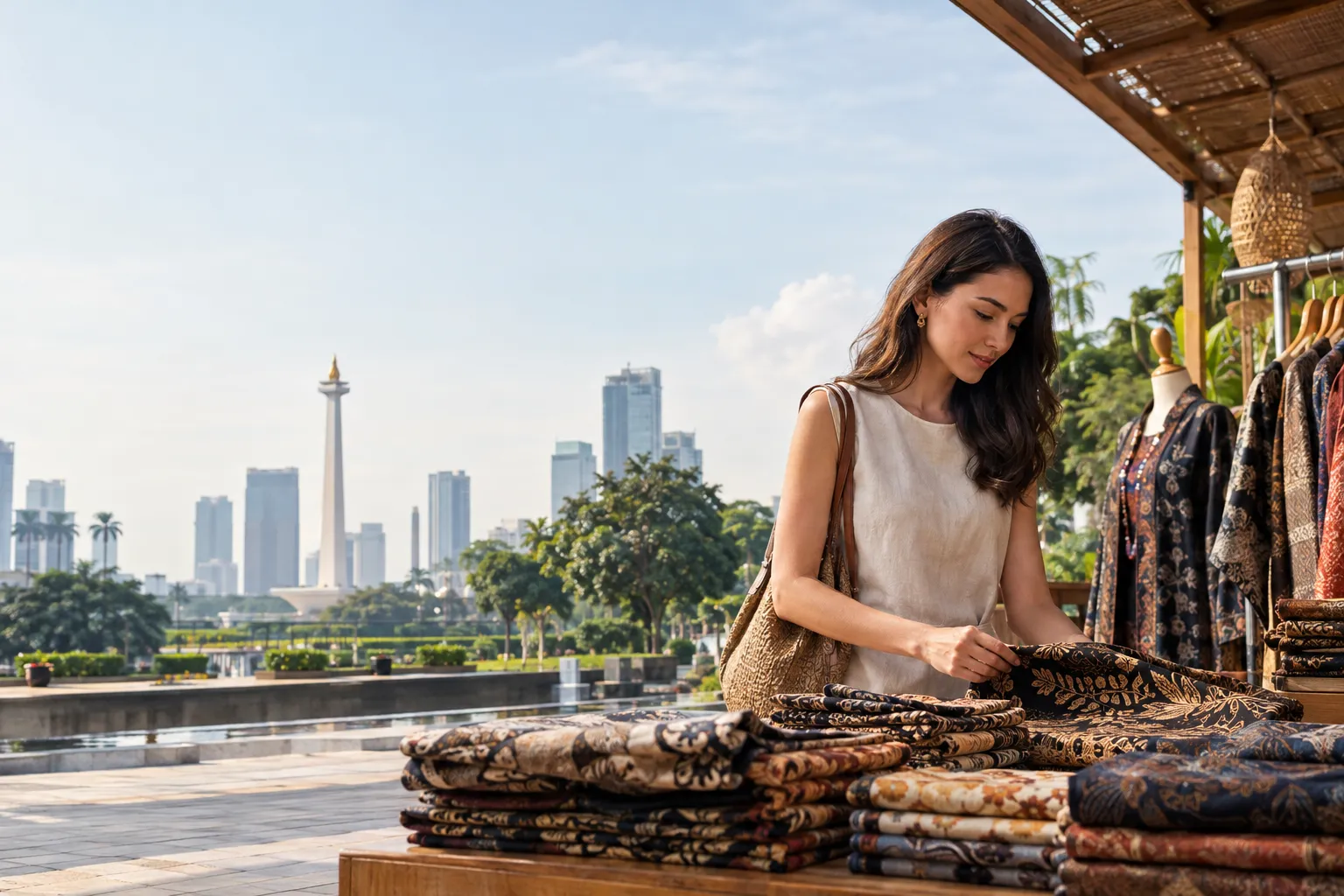
Sarinah is a useful first stop for readers who want to encounter Indonesian fashion and textile traditions in a contemporary retail setting. Jakarta’s tourism guide describes Sarinah as a place to browse local fashion and wastra, a term used for traditional textiles, including batik, tenun and songket. That range invites a closer look at the cloth itself: pattern, surface, colour and the way a textile is incorporated into a garment or accessory. Rather than treating a traditional textile as a decorative souvenir, consider how it might sit within a modern wardrobe. A scarf, shirt, jacket or bag can provide a more adaptable introduction than a highly occasion-specific piece.
What to notice when browsing wastra
Sarinah’s setting also makes it a natural bridge between local design and the wider retail landscape of central Jakarta. The city tourism guide notes access by TransJakarta, but routes and operating details can change, so check the current transit information before travelling. On arrival, take time to read the descriptions available at the venue and ask retailers about materials, care and construction. These practical questions are part of developing a personal connection with a garment: knowing how it is made and maintained may matter more than knowing whether it follows a passing trend. Treat the current directory and displays as a starting point, because product selections and tenants can change.
- Look for textile names and material descriptions rather than relying on a broad label such as “traditional”.
- Ask how a garment should be washed, stored and pressed before deciding whether it fits your routine.
- Compare a finished garment with accessories or fabric-based pieces to understand the range of ways a textile can be worn.
Thamrin City: batik, textiles and everyday wear
Thamrin City is one of the city’s more practical places to compare batik, clothing and textile-related offers in a single indoor setting.
Thamrin City for batik and clothing
Thamrin City offers a more concentrated encounter with batik and clothing. Indonesia’s tourism material describes the centre as a place to find batik, traditional clothing and local crafts; its information also identifies areas associated with batik, woven textiles and women’s fashion. This makes it a useful complement to Sarinah. Where Sarinah can introduce local fashion within a broader curated environment, Thamrin City can reward focused browsing across a wider range of textile and garment offers. Think of the visit as an opportunity to compare rather than to assume that every stall or item represents the same technique, origin or level of finish.
Reading pattern, colour and cut
Batik is not one uniform look. Differences in pattern, colour, scale and application can change the mood of a shirt, dress, wrap or accessory. When choosing a piece, notice how the pattern sits on the body and whether the garment’s cut gives it room to be the focal point. A restrained silhouette can make a vivid textile feel easy to wear; a more expressive shape may work when the pattern is quieter. If you are shopping for someone else, consider their usual colours and the kinds of clothing they already wear, instead of buying an item solely because it appears distinctive on a rack.
A more thoughtful way to browse
Browsing in a large retail centre can be lively and visually dense. Keep your own criteria in view: intended use, fabric feel, fit, care requirements and whether the item works with clothing you already own. Avoid assuming that the presence of a textile or craft label alone confirms a particular method of production; ask the retailer for details where they matter to your decision. Product selection can change, so regard general descriptions of the centre as orientation rather than a guarantee that a specific design or shop will be available on the day.
- Start with a simple purpose, such as finding a wearable batik shirt or a textile accessory.
- Check the garment’s fit and construction, and ask about care before purchase.
- If a detail about origin or technique is important, ask the seller rather than guessing from appearance.
International fashion in central Jakarta
The central mall corridor offers a useful counterpoint to textile-led shopping, with large retail settings and directories that can help you plan a focused visit.
The Thamrin–Sudirman mall corridor
The Thamrin–Sudirman corridor provides a different frame for personal style. Indonesia Travel describes the area as a setting for international designer shopping, while official directories at Plaza Indonesia and Grand Indonesia show fashion and lifestyle retail within the malls. Plaza Indonesia’s current directory groups labels by floor, and Grand Indonesia describes East and West Malls connected by a skybridge. These details make both useful reference points for visitors who want to compare international retail with Indonesian fashion elsewhere in the city. Check the live directories before setting out, since tenants and shop listings can change.
What the major malls add to a style itinerary
A mall visit can be useful even if you are not seeking a particular international label. It offers a familiar environment for assessing proportion, fit and styling, and a chance to observe how contemporary clothing is presented alongside accessories and lifestyle goods. Grand Indonesia’s two connected mall areas can make for an extended browse, while Plaza Indonesia’s directory can help visitors identify stores before arriving. Neither centre should be confused with a street fashion district or a single local design marketplace. They are large retail environments, best approached with a clear idea of what you want to explore and enough time to move at an unhurried pace.
Compare without turning the day into a checklist
For a more considered comparison, choose one or two questions before you enter: Which shapes feel comfortable in the local climate? How do fabrics differ in weight and texture? Which colours work with the clothes you brought? Thinking this way helps avoid treating shopping as a race between brands. If your interest is Indonesian design, use a mall browse as a point of contrast rather than as the whole story. A contemporary international wardrobe and traditional textiles can coexist; the useful question is how you would combine them without making a look feel overly composed.
- Use the official store directories to check current listings, not to assume every listed item is in stock.
- Compare silhouettes and fabric weight across different retailers.
- Leave space in the plan for a slower visit to a textile-focused centre.
Textile and clothing markets beyond Thamrin
Jakarta’s fashion offer is not confined to central malls; its different shopping areas serve different interests and require different expectations.
Beyond the central mall corridor
Jakarta’s shopping landscape extends beyond the central mall corridor. Indonesia Travel’s city overview distinguishes designer shopping around Thamrin–Sudirman from textile and clothing shopping in places such as Tanah Abang, Mangga Dua and Pasar Baru. That distinction is useful even if you only have time for a small sample of the city: different districts support different kinds of browsing. A large textile market is not the same experience as a mall directory, and a shopping centre focused on batik is not necessarily a substitute for a market visit. Choose according to your interests, mobility and tolerance for a busier shopping environment.
How to plan for market-style browsing
For shoppers drawn to fabric, these areas can add breadth to a visit, but they call for realistic expectations. The overview gives a broad picture of where different forms of shopping are associated with the city; it does not confirm current shop availability, opening arrangements or the range of stock on a particular day. If a specific garment, textile or seller is the reason for the trip, verify details through current sources before travelling. Otherwise, approach the visit with an open brief, such as looking for a fabric colour, a particular type of garment or ideas about how local clothing is styled.
A calm approach to a busy shopping day
A market visit can be more satisfying when you are prepared to compare, pause and leave without buying. Set a comfortable budget before you start, keep an eye on your belongings in crowded places and check fit, finish and care details carefully. If you do not have the language or knowledge to assess a particular claim, do not let urgency decide for you. A garment should appeal on its own terms and make sense for your life at home. That principle is as useful in a busy textile market as it is in a polished mall.
- Check current access and opening arrangements before making a special trip.
- Keep a short note of the item, material or colour you are seeking.
- Inspect seams, closures, lining and care information before committing to a purchase.
Building personal style through textiles and climate
Shopping becomes more personal when it connects a garment’s material and context with the way you actually dress.
Dress for the city’s changing environments
Personal style in Jakarta need not mean dressing for a single imagined version of the city. The most practical wardrobe for a visit usually responds to heat, humidity, indoor air-conditioning and the rhythm of a day spent moving between settings. Lightweight, breathable pieces can be comfortable outdoors; a light layer can help when spending time in cooled interiors. Comfortable footwear matters if the plan includes extended mall browsing or a market visit. These are general packing considerations rather than rules, and personal comfort, activity and the season should guide the final choices.
Making a textile feel like your own
The way you combine Indonesian textiles with familiar wardrobe staples can be subtle. A batik shirt can sit with simple trousers; a textile accessory can add colour to a neutral outfit; a more striking garment can be balanced with quieter pieces. Think about proportion and repetition: if a textile has a strong pattern, let it carry the visual interest rather than adding several competing prints. Try a garment on, if possible, and notice how it moves when you sit, walk and reach. A piece that feels natural in motion is more likely to become part of your wardrobe than one chosen only for a photograph.
Cultural curiosity without costume
Cultural attentiveness is part of considered shopping. Ask questions respectfully, avoid treating a textile tradition as a costume, and take care not to make assumptions about a garment’s significance from a pattern alone. If a retailer explains the material or design, listen before deciding how you might wear it. Buying something that you understand and will use is often a more thoughtful choice than collecting pieces for their novelty. A small number of well-chosen items can say more about your experience of Jakarta than a suitcase filled with purchases that never leave the wardrobe.
- Prioritise comfort, fit and repeat wear over novelty.
- Ask about material and care in a straightforward, respectful way.
- Choose patterns and colours that work with garments you already own.
Planning a thoughtful fashion day in Jakarta
A well-paced fashion visit has a clear purpose, a manageable number of stops and enough flexibility to respond to what you find.
- A textile-led day in central Jakarta
A useful itinerary groups places by purpose rather than trying to cover every district. For a textile-led day, begin with Sarinah to get an introduction to Indonesian fashion and wastra, then consider Thamrin City for a broader browse of batik, clothing and textiles. For a day centred on contemporary retail, use the official directories to choose between Plaza Indonesia and Grand Indonesia, then add a textile-focused visit only if you have sufficient time and energy. These are planning frameworks, not fixed routes: current opening arrangements, traffic and your own interests should determine the order.
- A slower comparison itinerary
If the main aim is comparison, pair one local-fashion stop with one major mall rather than attempting several large venues in succession. This creates room to notice differences in materials, presentation and price positioning without making the day feel like a retail endurance test. A smaller plan also makes it easier to pause for food, adjust to the weather and revisit a shop if something merits a second look. Use current venue information and local transport updates to decide how to move between stops; no travel time or route should be assumed from a map alone.
- Keep the practical plan separate from the shopping plan
Travellers who have several destinations in one day may prefer to arrange transport in advance, especially when carrying purchases or coordinating a group. UK Direct Chauffeurs is a London-based provider, and the confirmed business facts describe pre-booked chauffeur transport in London and the United Kingdom, with international arrangements subject to confirmed destination availability. The company’s confirmed service area does not establish Jakarta coverage, so it should not be treated as a local transport recommendation for this itinerary. In Jakarta, check local transport options and current venue details independently.
Fashion districts and personal style in Jakarta
The point is not to find one definitive Jakarta look, but to understand how different materials, settings and ways of dressing can inform your own.
A city best understood through contrast
Jakarta’s fashion districts are most rewarding when treated as complementary rather than competing experiences. Sarinah brings Indonesian fashion and traditional textiles into view; Thamrin City offers a concentrated setting for batik, clothing and fabric-related browsing; the Thamrin–Sudirman malls provide a contrast through large contemporary retail environments; and other textile and clothing areas broaden the city picture further. Together, these settings make it possible to consider style not only as a matter of labels, but also as a meeting of material, craft, cut, context and daily use.
Let curiosity shape the wardrobe
The most satisfying purchase may be the one you understand well enough to wear repeatedly. Take time to assess fit, construction and care. Ask questions without assuming that every item can be reduced to a single story. Check current directories and venue information, and leave room for the unexpected without making a purchase obligatory. By moving between local textiles and contemporary retail at a pace that suits you, you can build a personal impression of Jakarta’s fashion landscape rather than simply collecting addresses.
Jakarta fashion districts FAQs
Where can I browse Indonesian textiles and fashion in Jakarta?
Sarinah is described by Jakarta’s tourism guide as a place to browse Indonesian fashion and wastra, including batik, tenun and songket. Thamrin City is described by Indonesia Travel for batik, traditional clothing and local crafts. Check current venue information before visiting.
What is the difference between Thamrin City and the Thamrin mall corridor?
Thamrin City is associated with batik, clothing and textile-related shopping. The Thamrin–Sudirman corridor is described by Indonesia Travel as a setting for international designer shopping and includes large malls such as Plaza Indonesia and Grand Indonesia.
Can I find international fashion retailers in central Jakarta?
Official directories for Plaza Indonesia and Grand Indonesia list fashion and lifestyle retailers. Store listings and tenants can change, so check the live directories for current details.
What should I consider when buying batik or other textiles?
Consider the fabric, fit, construction, care requirements and whether the piece suits your wardrobe. Ask the retailer for details about material or technique where these matter to your choice, and avoid assuming a particular method from appearance alone.
Are opening hours and transport arrangements fixed?
They may change. Check current venue information and local transport updates before making a special trip; the article does not assume specific hours, routes or travel times.
Sources and references
Explore Jakarta through the way it dresses
Explore Jakarta at your own pace Related information and services: London City Airport Chauffeur Service, City to City Chauffeur, City to City Chauffeur Transfers UK.
Article reviewed and updated October 28, 2026.
UK Direct Chauffeurs