Heritage hotels and historic neighbourhoods in Ely
Discover how Ely’s heritage hotels, Cathedral-centred streets and fenland setting come together in a considered guide to staying and exploring the historic city.
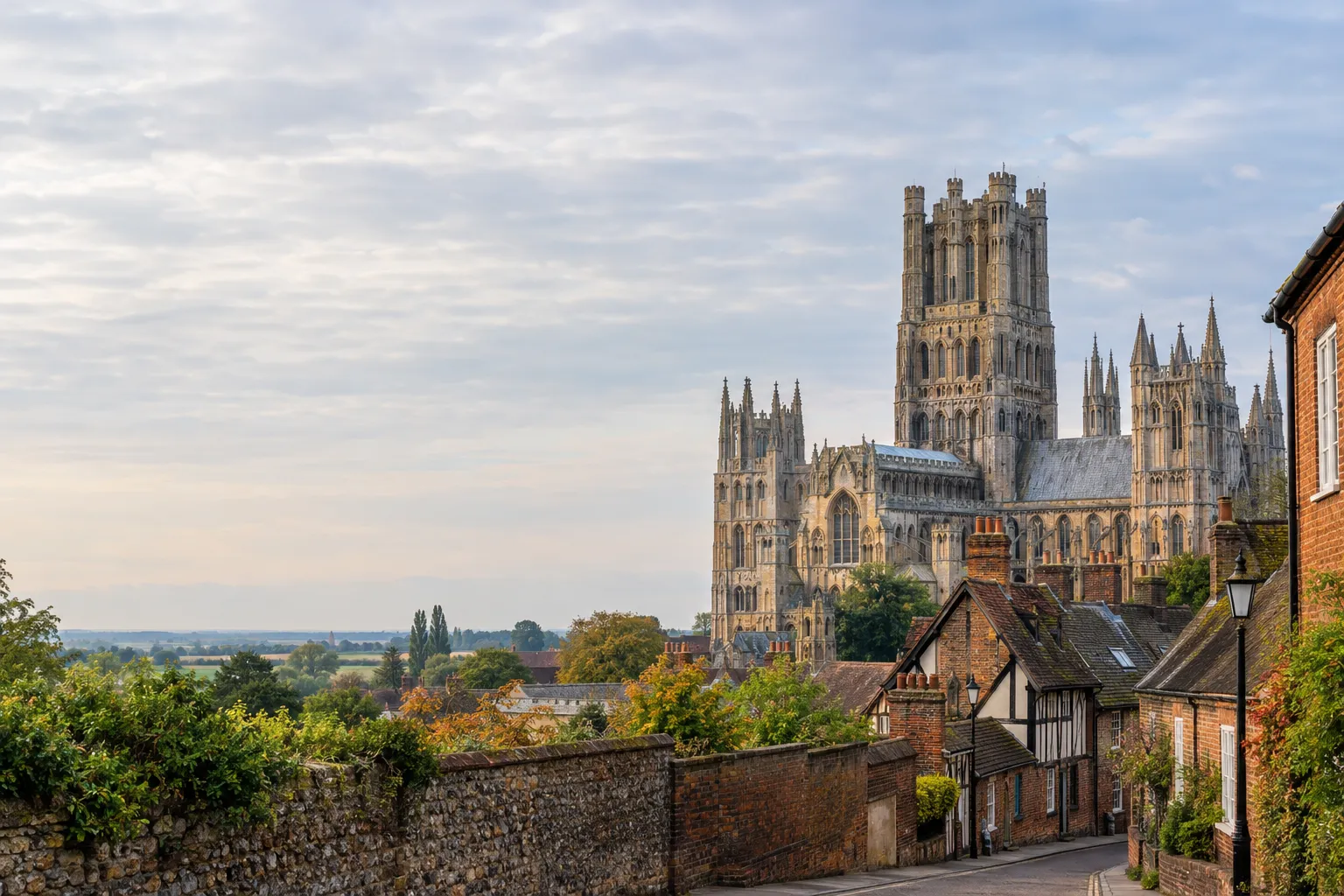
Ely heritage stays and historic streets
Ely’s heritage experience centres on its Cathedral, compact historic streets and fenland setting.
Poets House describes three Grade II listed properties near the Cathedral; the Lamb Hotel is described by Visit Ely as a historic coaching inn.
- Poets House description
- Three Grade II listed properties
- Poets House to Ely Cathedral, as stated by the hotel
- About 100 yards
- Poets House stated accommodation count
- 21 bedrooms
- Visit Ely description of the Lamb Hotel
- Historic coaching inn
How Ely’s landscape and history shape its heritage
Ely’s sense of heritage comes from the relationship between its landmark buildings, everyday streets and distinctive island setting.
Heritage hotels and historic neighbourhoods in Ely: a slower way to see the city
Ely rewards the visitor who lets the city set the pace. Its Cathedral rises above a compact centre of market streets, older houses and waterside paths, while the surrounding fenland gives the skyline a breadth that feels different from the enclosed streets of many historic towns. A stay in a heritage property can make that setting part of the experience rather than simply a place to sleep. The most appealing approach is not to treat the city as a checklist of monuments, but to use a carefully chosen base and explore the layers around it: the monastic story, the market-town centre, the domestic histories and the edge of the water.
The idea of a historic neighbourhood in Ely is less about a single preserved quarter and more about a close-knit sequence of streets and landmarks. Fore Hill, Market Place, High Street, St Mary’s Street and Silver Street appear among the town-centre places identified by the local Eel Trail. The Cathedral precinct, the central streets and Riverside Walk each offer a different aspect of the city. Their proximity makes it possible to experience architectural detail and everyday town life in the same short walk.
For a considered weekend, choose a hotel whose history and location suit the kind of stay you want, then leave space in the itinerary. A morning inside the Cathedral, a pause in the market area and an afternoon by the river create a more rounded impression than rushing between attractions. The distinction between hotel and neighbourhood matters here: the building gives a sense of continuity, while the streets outside reveal how Ely remains a lived-in town.
The fenland setting behind Ely’s historic centre
Ely’s setting is central to its character. Ely Museum describes the city’s development from a monastic foundation into a market town, shaped by its island position amid wetlands. That geography helps explain the prominence of the Cathedral: its scale and elevated presence are not merely an architectural spectacle, but a reference point across the settlement and fenland landscape.
The Cathedral’s story anchors a visit, but the surrounding streets provide the human scale. Approaching from the central area, the visitor moves between open spaces and narrower streets, glimpsing older façades, shopfronts and the changing silhouette of the building above them. The contrast is part of the pleasure. Ely feels both monumental and intimate: the Cathedral is visible from many viewpoints, yet the central streets are close enough to explore without turning the day into a long-distance excursion.
The city’s waterways and fenland setting add another dimension. Riverside Walk offers a change from the architectural focus of the centre, opening the experience towards the water and the landscape beyond. It is a useful counterpoint to indoor visits and a reminder that Ely’s story is inseparable from its physical surroundings. Weather and path conditions can affect an outdoor walk, so check locally if conditions are poor.
A heritage stay works best when it encourages attention rather than enclosure. Look at the relationship between building and street: the scale of a doorway, the way a lane opens towards a landmark, or the sudden appearance of the Cathedral over rooftops. These small observations connect a hotel’s preserved fabric with the wider town. They also make a visit personal without requiring an elaborate itinerary.
Where to stay and how to explore Ely’s old centre
Historic accommodation is most meaningful when considered alongside the streets, landmarks and waterside within easy reach.
Two contrasting heritage stays: Poets House and the Lamb Hotel
Poets House offers one of the clearest ways to connect a stay with Ely’s architectural heritage. The hotel describes itself as comprising three Grade II listed properties and places itself around 100 yards from Ely Cathedral. Its character is therefore closely tied to the historic centre: the building is not an isolated country retreat but part of the same walkable setting as the Cathedral and central streets. The hotel states that it has 21 bedrooms; current room options and availability should be checked directly with the property.
The Lamb Hotel presents a different historic-hospitality idea. Visit Ely describes it as a historic coaching inn close to the Cathedral, noting features such as crooked walls and low beams. Those details evoke the layered, lived-in character many visitors seek in an old inn. They are also a useful reminder that historic buildings can feel distinct precisely because they were not designed as modern, uniform interiors. Guests should consult the hotel’s own current information for facilities, room details and arrangements.
These two examples should not be reduced to a ranking. One offers a listed-property identity in a hotel setting; the other carries the associations of an old coaching inn. The right choice depends on what matters to the visitor: architectural atmosphere, proximity to a particular attraction, the style of accommodation, or practical requirements such as room configuration. It is sensible to check accessibility, services, cancellation terms and current operating details with each property rather than assume these from age or appearance.
When selecting a heritage hotel, consider how the immediate surroundings will shape the day. A central location can make it easier to return between visits or take an evening walk, but older buildings may have features that differ from contemporary accommodation. Ask the property specific questions about access and facilities if these are important. Heritage is most enjoyable when expectations are clear and the practical details have been confirmed.
- Poets House identifies its accommodation as three Grade II listed properties, near Ely Cathedral.
- Visit Ely describes the Lamb Hotel as a historic coaching inn near the Cathedral.
- Confirm current room information, access and facilities with the hotel before booking.
A walk through Ely’s market streets and riverside
Ely’s central streets reward a walk without a rigid timetable. The local Eel Trail leaflet identifies Market Place, Fore Hill, High Street, St Mary’s Street, Silver Street and Riverside Walk among its named locations. Taken as a loose framework rather than a promise of a particular route condition, these places suggest a natural progression through the town: begin where market life gathers, follow the streets through the historic centre, then turn towards the water for a change of scale.
Market Place and Fore Hill help orient visitors within the centre. Rather than hurrying through, notice how the open spaces relate to the narrower streets around them. High Street and St Mary’s Street carry the ordinary rhythms of the town alongside its older fabric; shopfronts and local activity are part of the experience, not a distraction from it. Silver Street offers another thread through the central street pattern. The pleasure is in seeing how the city’s landmark and its everyday life coexist.
Riverside Walk makes a natural pause after the built environment. The change from street frontage to open water allows the visitor to consider Ely’s fenland setting and the practical importance of waterways to the area’s story. The Eel Trail leaflet is a helpful planning reference, but visitors should check current local information for route conditions and any changes before setting out.
A walk can be adapted to energy, weather and interests. Those drawn to architecture may spend longer around the Cathedral precinct and older streets; visitors more interested in landscape can extend their time by the water. Comfortable footwear is useful, and a flexible plan leaves room for unplanned discoveries. The compactness of the centre is an invitation to pause rather than a reason to squeeze in every stop.
The Cathedral, historic house and museum
Ely’s most familiar sights become richer when each is understood as one part of a wider history.
Planning a visit to Ely Cathedral
Ely Cathedral is the defining landmark of a heritage visit, but it is also an active place of worship and a working visitor destination. The Cathedral’s official visitor pages provide current practical information and advise checking arrangements because access can be affected by services, events or maintenance. Do not rely on a general itinerary for entry, opening times or access to particular areas; consult the official information close to the date of travel.
Allow time to experience the building as a whole. Its scale is most apparent from a distance, while a closer visit rewards attention to the changing spaces and architectural detail. Official visitor material describes available in-person and digital guides, which can help visitors decide how much context they want. An audio or digital guide can be useful for an independent visit, while a more leisurely unstructured visit may suit those who prefer to absorb the atmosphere at their own pace. Check what is currently offered before arrival.
The Cathedral’s relationship with the town matters as much as its interior. It shapes views along the central streets and provides a point of orientation throughout a walk. Consider approaching it at different times of day, if your schedule allows, rather than seeing it only as a single booked stop. The changing light and the surrounding public spaces give the building a different presence from each viewpoint.
Visitors should be considerate of worship, other visitors and any photography or access guidance in force. The official Cathedral pages are the appropriate source for current rules, opening arrangements and visitor facilities. This is especially important for trips planned around a particular service, event or feature: availability should never be assumed from an older guide or third-party listing.
- Check Ely Cathedral’s official visitor pages for current opening arrangements and access notices.
- Allow for possible changes linked to services, events or maintenance.
- Use official visitor information to confirm what guides and facilities are currently available.
Domestic history at Oliver Cromwell’s House and Ely Museum
Oliver Cromwell’s House gives a more domestic perspective on Ely’s past. Its official site describes a self-guided audio tour and period-room interpretation, which provide a way to encounter history through the scale and character of a house rather than through a large public monument. The experience complements the Cathedral: one expresses religious and civic prominence, while the other brings the visitor closer to home life and historical interpretation.
The house is particularly suited to a visit with a little unhurried attention. Period rooms invite visitors to think about how objects, interiors and stories are used to interpret the past. A self-guided format also allows individuals to spend time where their interest lies, subject to the venue’s current visitor arrangements. The official site gives seasonal opening information, so check the latest schedule before making it the fixed point of a day.
Ely Museum offers another useful perspective, focusing on the development of the city from monastic foundation to market town and on the influence of the surrounding wetlands. Taken together, the house, museum and Cathedral offer different scales of interpretation: domestic, local and monumental. They need not all be visited in one day. Choosing one or two and allowing time to reflect can be more rewarding than hurrying through a succession of interiors.
For a short break, a useful sequence might be the Cathedral in the morning, a pause in the town centre, and either the historic house or museum in the afternoon, depending on opening arrangements and personal interests. This is a planning idea, not a guarantee that venues will be open simultaneously. Verify schedules directly, and keep an alternative walk through the centre or along the riverside in reserve.
How to plan a measured heritage break in Ely
A little advance checking creates room for a more relaxed experience without over-planning every hour.
- A thoughtful two-day rhythm for heritage stays in Ely
A heritage weekend in Ely does not need an elaborate itinerary. Begin with the practical anchors: where you are staying, the current opening arrangements for the places you most want to see, and how much time you wish to spend outdoors. Then build a flexible day around one principal visit and one or two complementary experiences. That leaves room for the rhythm of the town and avoids turning its compact centre into a race.
On arrival, take a short orientation walk through the central streets. The names on the Eel Trail provide a useful frame for thinking about the town’s geography, from the Market Place and Fore Hill through High Street and St Mary’s Street towards Silver Street and the river. Treat the leaflet as a guide to places, not as confirmation that every section is currently unobstructed or that market activity follows a particular schedule. Check current local information when it matters to your plans.
The next day, give the Cathedral a substantial window in the schedule and check the official visitor information before travelling. A meal or rest in the centre can separate the visit from an afternoon at Oliver Cromwell’s House or Ely Museum. If the weather is inviting, the waterside provides an alternative way to spend the latter part of the day. If conditions or opening times change, the historic streets remain a meaningful experience in their own right.
Visitors arriving from elsewhere in the region may prefer to arrange their journey around a confirmed accommodation and attraction plan. UK Direct Chauffeurs is a London-based provider of pre-booked chauffeur transport across London and the United Kingdom; any journey to or around Ely would need to be arranged and confirmed for the specific itinerary. This is a practical transport option for travellers who value a pre-arranged road journey, not a hotel connection or an included sightseeing service.
- Confirm hotel and attraction details before fixing the day’s schedule.
- Choose one main indoor visit, then leave room for streets or riverside.
- Keep an alternative plan in case of changing access or weather.
- Practical details for choosing a heritage stay and planning visits
A central hotel makes it easier to return to the room between walks and visits, while an inn’s distinctive setting can itself be part of the appeal. Neither choice guarantees a particular level of accessibility or a specific set of facilities. Ask the property directly about steps, lifts, room access, parking, luggage arrangements and any other requirements that affect your stay. Historic buildings can have individual layouts, so specific questions are more useful than assumptions based on photographs or descriptions.
For Cathedral visits, check official access and opening updates, especially if your plans depend on a particular date or time. The Cathedral may need to make changes for services, events or maintenance. Oliver Cromwell’s House also publishes seasonal opening information, so confirm the latest arrangements rather than relying on an old itinerary. Ely Museum’s official website is the best place to check its current visitor information.
For a walk, use the town’s named streets as a flexible orientation tool and allow extra time if you want to stop for photographs, browse or take a riverside pause. The compact scale is helpful, but it does not remove the need to consider weather, mobility and route surfaces. If a particular path or building access is essential, verify details with the responsible venue or local authority in advance.
A calm approach to practical planning protects the pleasure of the visit. Confirm what is time-sensitive, leave the rest open, and avoid relying on old third-party listings for hours, prices or availability. The sense of history in Ely is not confined to a ticketed interior; the Cathedral views, market streets and waterfront remain valuable parts of the experience, even when the day’s plan needs to change.
Let Ely’s streets set the pace
A successful heritage break balances preparation with enough time to notice the city as it is today.
The appeal of Ely is in the spaces between its landmarks
Ely is best understood through contrast: the Cathedral’s commanding presence and the close texture of its streets; the formal interpretation of a museum and the open movement of a riverside walk; the preserved character of a historic inn and the daily life of a market town. A heritage hotel can provide a memorable base, but the city’s atmosphere emerges in the spaces between destinations.
Begin with the kind of stay you want. A listed-property hotel near the Cathedral, such as Poets House, and a historic coaching inn such as the Lamb Hotel offer different associations, and the right fit depends on your preferences and practical requirements. Confirm current room details, accessibility and services directly with the accommodation. Then choose a few experiences that speak to you: the Cathedral for architectural scale, Oliver Cromwell’s House for domestic interpretation, Ely Museum for local context, and the centre or riverside for a less structured sense of place.
The best itinerary is one that can adapt. Check official visitor information for changing access, allow time to walk between central places, and keep an open interval in the day. That is the quiet privilege of a compact historic city: there is no need to extract every fact or photograph in a single visit. One can return to a street, notice a detail missed earlier, and let the place gradually take shape.
For visitors drawn to heritage hotels and historic neighbourhoods in Ely, the lasting impression is likely to come from that combination: a stay rooted in the built past, a landmark that gives the town its distinctive outline, and a sequence of ordinary streets leading towards the water. See the official sources listed below for current venue information and plan the rest with enough space to wander.
A final note on experiencing Ely with care
A few clear questions help keep a heritage break both practical and enjoyable. Are the hotel’s historic features part of the experience you want, and have you checked whether its layout suits your needs? Which attraction matters most to you, and have you confirmed its current opening arrangements? Would you rather spend time inside a landmark, follow local streets, or balance both with a riverside walk?
The answers need not produce a tightly timed schedule. They can simply help you choose a base and avoid preventable surprises. Ely’s small centre makes spontaneous detours appealing, but current visitor arrangements still matter for ticketed or managed sites. Keep official venue pages close to hand, particularly for the Cathedral and Oliver Cromwell’s House, and consult local information for route conditions.
Above all, treat heritage as an invitation to observe rather than a promise that every building will be accessible in the same way. Older properties have individual histories and layouts; visitor venues have their own rules and changing schedules. With sensible checks, the city’s distinct character can be enjoyed without overstating what a particular stay or attraction includes.
Ely heritage break overview
A two-paragraph overview of Ely’s heritage stays and the places around them.
Overview
Ely’s centre brings together the Cathedral, historic streets, visitor attractions and riverside in a setting shaped by the surrounding fenland. Heritage accommodation can make that setting part of the stay.
Stay
Poets House describes its hotel as three Grade II listed properties about 100 yards from Ely Cathedral. Visit Ely describes the Lamb Hotel as a historic coaching inn near the Cathedral.
heritage hotels in Ely FAQs
Which heritage hotels are highlighted in Ely?
Poets House describes three Grade II listed properties near Ely Cathedral. Visit Ely describes the Lamb Hotel as a historic coaching inn close to the Cathedral. Check each hotel directly for current room details and facilities.
Can Ely’s historic centre be explored on foot?
The local Eel Trail identifies central streets and Riverside Walk, and Ely Cathedral describes the city as easy to explore on foot. Check current route conditions and access information before setting out.
Should I check Ely Cathedral opening times before visiting?
Yes. The Cathedral advises visitors to check its official visitor information because access can change for services, events or maintenance.
What else can I visit besides Ely Cathedral?
The visitor sources identify Oliver Cromwell’s House and Ely Museum as additional places to explore. Check their official websites for current opening arrangements.
Sources and references
Let Ely’s heritage unfold at its own pace
Explore Ely at an unhurried pace Related information and services: Long Distance Chauffeur Service Across the UK, Event Chauffeur Hire Across The Uk, London City Airport Chauffeur Service, City to City Chauffeur.
Article reviewed and updated October 24, 2026.
UK Direct Chauffeurs