Antiques and collecting culture in Woodstock
Woodstock, Oxfordshire, offers more than a destination for antique browsing. The town brings together a changing dealer selection, local history and the nearby collecting traditions of Blenheim Palace. For visitors, the interest lies in seeing how objects move between commerce, memory and public interpretation.A rewarding visit can begin at Antiques at Heritage, continue through the Oxfordshire Museum’s account of local life and work, and widen to the historic interiors and art context at Blenheim. Each stop has its own purpose and current arrangements, so check details before travelling and leave space for careful looking.
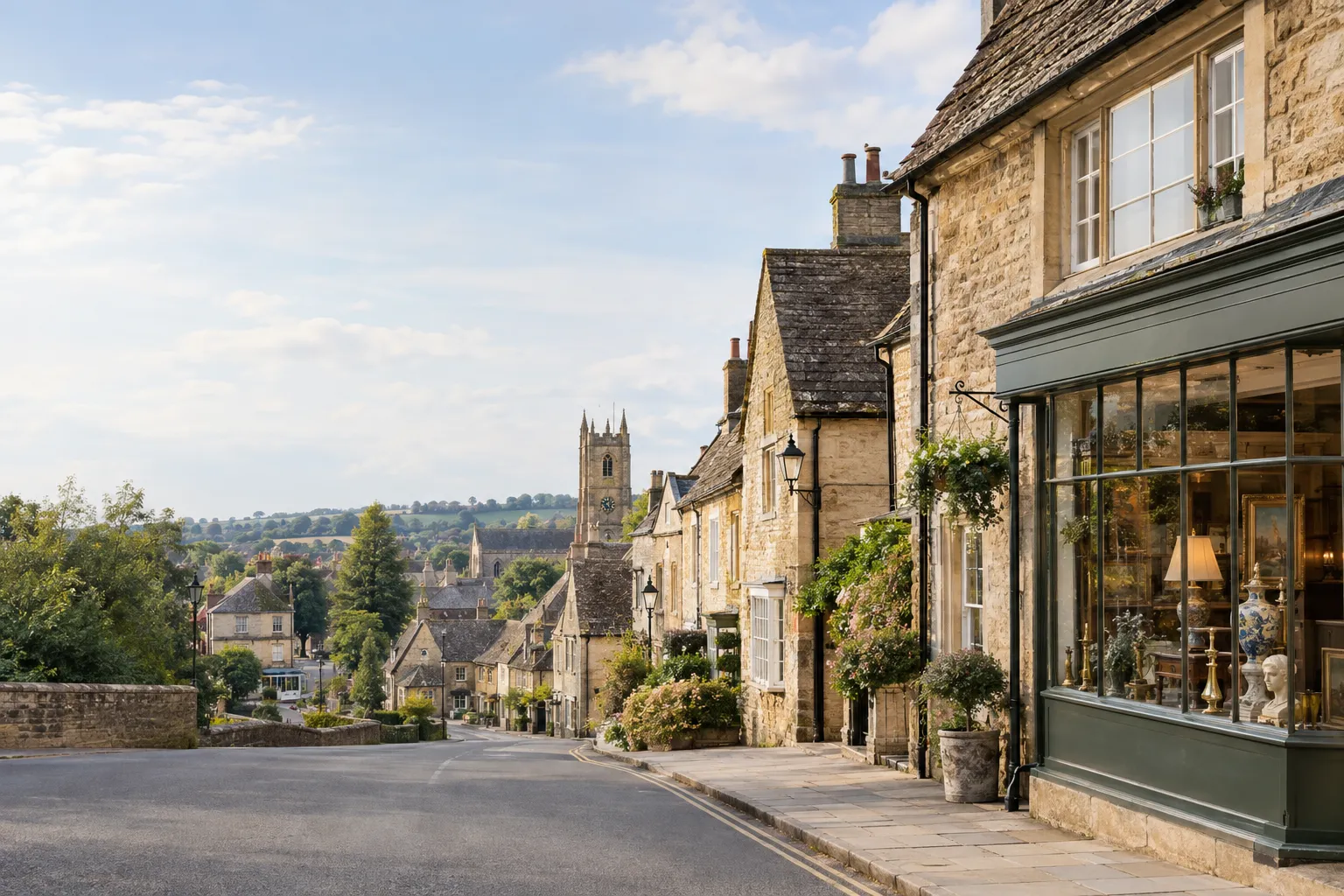
At a glance
Antiques at Heritage is the principal named antiques venue in Woodstock in the supplied visitor research.
Its listed categories include furniture, silver, fine art, porcelain, clocks and books, with a changing selection described by the listing.
- Antiques at Heritage, as described in the Cotswolds visitor listing
- 12 dealers
- The building date given for Antiques at Heritage in the visitor listing
- 15th century
- Woodstock’s approximate distance from Oxford, according to the town visitor site
- 8 miles northwest
- The Woodstock subject included in the Oxfordshire Museum’s local gallery
- Glove trade
Reading Woodstock through its collections
Begin with the town itself: a historic centre where a focused antiques browse sits within a wider landscape of local memory and collection.
Antiques and collecting culture in Woodstock: a town of objects and stories
Woodstock rewards the visitor who looks beyond the idea of antiques as a row of objects for sale. In its compact historic centre, collecting connects with the town’s own past, the local stories preserved by the Oxfordshire Museum and the long history of patronage associated with nearby Blenheim Palace. A visit can move naturally from looking closely at a piece of furniture or porcelain to considering how objects acquire meaning through use, inheritance, display and scholarship.
The practical starting point is Antiques at Heritage, a Woodstock antiques venue described by the Cotswolds visitor listing as a collection of twelve dealers in a 15th-century building. Its reported range includes furniture, silver, fine art, porcelain, clocks and books, with stock that changes. Around that browse, the town’s museums and Blenheim’s collections provide context: not simply what people collect, but why they preserve, arrange and interpret objects.
Why Woodstock invites a collector’s way of looking
For the collector, the pleasure lies partly in attention. A familiar object can look different when its materials, construction and signs of use are considered; an unfamiliar one can prompt questions about its origin, function and journey between owners. For the curious visitor, the same habits make a browse more rewarding, even without a purchase in mind.
Woodstock is well suited to this slower form of looking. A town-centre antiques visit can be combined with local history and, subject to current opening and admission arrangements, the Palace and its grounds. The point is not to treat these places as a single packaged attraction, but to notice how each gives a different frame to the past: the private eye of the collector, the evidence of local history, and the public presentation of a historic collection.
Finding antiques in Woodstock
The venue’s published range is broad, while individual stock is changeable. A flexible plan makes the visit more useful.
Antiques at Heritage and the pleasure of the changing find
Antiques at Heritage is the clearest named destination for an antiques browse in Woodstock. The Cotswolds visitor listing describes the venue as occupying a 15th-century building and bringing together twelve dealers. It names furniture, silver, fine art, porcelain, clocks and books among the categories visitors may encounter. Because the stock changes, a listing of categories should be read as an indication of range rather than a promise that any particular object will be present.
A useful visit begins with curiosity rather than a fixed shopping list. Take time to compare pieces within a category, look at how an item has been made and ask what can reliably be said about its age, materials and condition. If a particular type of object is the purpose of the visit, contact the venue using its current published details before setting out. Do not assume that a listing or an earlier visit confirms today’s inventory or opening arrangements.
- Decide whether you are browsing broadly or seeking a particular object.
- Inspect condition and construction rather than relying on appearance alone.
- Ask what is known about an item’s history and which details are documented.
- Confirm current opening arrangements directly before travelling.
How to browse with discernment
A changing selection is part of the character of a multi-dealer antiques venue. It makes repeat visits potentially different, but it also calls for realistic expectations: a category may be represented without a particular period, maker or price range being available. The best approach is to treat a shop visit as an opportunity to learn as well as to acquire.
For a considered purchase, note the object’s measurements, condition and any attribution or provenance supplied by the seller. Provenance means the documented history of ownership or custody; it is not the same as an appealing story repeated without supporting records. For significant purchases, seek independent specialist advice where appropriate. These are sensible collecting practices, not a claim that every object requires formal authentication.
What Woodstock’s history adds to collecting
The town’s collecting culture is not limited to things offered for sale. Local history gives objects a setting and a human scale.
The Oxfordshire Museum and Woodstock’s local history
Collecting becomes richer when objects are considered in relation to the lives and places that shaped them. The Oxfordshire Museum, in Woodstock, provides one local frame. Oxfordshire County Council describes its galleries as telling stories of the county, with a Woodstock gallery covering the town’s former glove trade. Its broader subjects include archaeology, Roman history, Victorian Oxfordshire and local collections.
That context helps distinguish a town’s history from the more general story of an antique. An object does not need to have been made in Woodstock to illuminate how people lived in the region; equally, a connection to a place should be established rather than assumed. Museum displays, local records and careful interpretation can help visitors understand the difference between an object’s known history and the wider historical setting in which it might be understood.
From private ownership to public interpretation
The museum is not a substitute for an antiques shop, and an antiques shop is not a museum. Their purposes differ. A dealer presents objects for consideration and possible purchase; a museum selects and interprets material to communicate stories to the public. Seeing both can sharpen a visitor’s sense of how objects move between private ownership and public memory.
Before visiting, check the museum’s official pages for current opening details, exhibitions and access information. Gallery displays and arrangements can change. The council’s online galleries overview is a sound starting point for understanding the subjects represented, but current visit planning should rely on the museum’s latest published information.
Blenheim Palace and the life of a collection
Nearby Blenheim offers an institutional and architectural counterpoint to the smaller scale of town-centre browsing.
Blenheim’s collections: inherited taste and changing interpretation
Blenheim Palace adds a different scale and perspective. The Blenheim Art Foundation describes a history of collecting across successive generations, including gems, books, plants and flowers, and presents contemporary art alongside the historic collection. That account makes collecting here a story not only of possession, but of taste, inheritance, changing priorities and public presentation.
The Palace’s visitor information describes State Rooms containing portraits, tapestries and furniture, alongside gardens, parkland and exhibitions. These settings can help visitors consider how objects function within an interior: a portrait can assert lineage, furniture can express design and use, while a tapestry can shape the atmosphere and meaning of a room. The historical interpretation belongs to the venue’s own context; it should not be confused with the history of an individual object encountered in a shop.
- Consider how an object’s setting influences the way it is seen.
- Notice the difference between a historic collection and a contemporary exhibition.
- Check the Palace’s current visitor information for opening, admission and exhibition details.
Historic interiors beside contemporary art
A visit to Blenheim is best planned as its own experience, not presumed to be included in an antiques outing. Access arrangements, exhibitions and what is open to visitors can vary, so consult the Palace’s official visitor pages before making plans. The Blenheim Art Foundation collection page provides a separate perspective on the Foundation’s work and its relationship with the site.
Together, these sources offer a useful distinction for anyone interested in collecting: a collection can be valued for its history and continuity, but it can also be reinterpreted through new works and changing curatorial choices. That tension between preservation and renewal is part of what makes the broader Woodstock area rewarding for readers interested in objects and the stories attached to them.
Practical planning for Woodstock
A little advance checking protects the quality of the visit and helps avoid assumptions about stock, access or transport.
- Planning an antiques and culture day
A well-paced day allows room for looking without turning the town into a checklist. Start by checking current details for Antiques at Heritage and the Oxfordshire Museum, then decide whether Blenheim fits the time and interests of the visit. These venues have different purposes and their opening arrangements are not interchangeable. Confirm the details separately, including any exhibition or admission information that matters to your plans.
Woodstock’s visitor information describes the town as eight miles northwest of Oxford and notes regular bus links with the city and train stations. This gives visitors a useful general orientation, but routes and service times should be checked with current transport information. Allow time to walk between town-centre stops, pause for a closer look and consider how purchases will be carried or transported. For a substantial or fragile acquisition, discuss safe handling and onward arrangements with the seller before committing.
- Check official venue information close to the day of your visit.
- Allow separate time for a shop browse, museum visit and any Palace visit.
- Check current public transport routes and times rather than relying on general destination descriptions.
- Plan how a large, delicate or valuable purchase could be moved safely.
- Thoughtful collecting, careful travel
If the visit includes a purchase, practical judgement is as important as aesthetic instinct. Confirm dimensions before buying, especially where an object must fit a particular room or vehicle. Ask about condition, repairs and what documentation accompanies the object. For items that may be fragile, clarify how they should be packed and whether any special handling is needed.
Visitors coming from further afield may also want to think ahead about luggage and onward travel. UK Direct Chauffeurs is a London-based chauffeur service that offers pre-booked transport across London and the United Kingdom. That may be relevant when arranging transport around a wider itinerary, but the company does not establish a Woodstock antiques tour or special access to local venues. Any journey would need to be discussed and confirmed for the individual booking.
How to look beyond the label
Good collecting is built on curiosity, but also on the distinction between what is documented, what is observed and what is only suggested.
Questions that make a collection more thoughtful
The word “antique” is often used broadly in everyday conversation, but serious collecting depends on clearer descriptions. Ask what is known about an object rather than treating a style or appearance as proof of age. Look for details that can be examined: materials, joinery, marks, wear, repairs and any paperwork offered. These observations can inform questions; they do not by themselves establish authenticity or a precise date.
Provenance should be described accurately. A recorded ownership history can strengthen an object’s story, while an undocumented account may still be interesting but should remain unverified. When a purchase is important or costly, independent expert advice can be worthwhile. The aim is not to make every browse forensic, but to keep enthusiasm and evidence in balance.
- Ask which claims are supported by records and which are informed opinion.
- Separate visible condition from claims about age, maker or ownership history.
- Seek specialist advice for purchases where attribution or value matters substantially.
Evidence, interpretation and the collector’s eye
The same care applies to cultural and historical interpretation. A museum or historic house can explain a collection’s context, but visitors should avoid transferring that context to an unrelated object without evidence. Conversely, an object’s humble function can be historically revealing even when it was not made for a famous owner or grand interior.
This is one reason the combination of Woodstock’s local history, its antiques browse and Blenheim’s collections feels coherent without being identical. Each asks a different question. What did people make and use? What does a town remember about its work and community? How do generations gather and display objects? Moving between these questions gives the day depth while leaving room for discovery.
The lasting appeal of collecting in Woodstock
Woodstock’s collecting culture rewards a visitor who can move between close attention to an object and a wider understanding of place.
A considered conclusion: collecting as a way of seeing
Antiques and collecting culture in Woodstock is best understood as a conversation between scales. At one end is the close encounter with a particular piece: its surface, construction, condition and the questions it raises. At another is the civic story told through local history. Beyond that, Blenheim shows how collections can represent inheritance and taste while continuing to change through contemporary interpretation.
A visitor does not need to be an experienced collector to take part. A considered browse, a museum gallery and time spent attending to the setting of historic objects can make a satisfying cultural visit. The most useful preparation is modest: confirm current opening details, keep claims about objects proportionate to their evidence and leave enough time to look carefully. In Woodstock, that approach makes the objects more than things to acquire. It makes them prompts for understanding how people remember, arrange and pass on the past.
Leave room for the unexpected
The town’s appeal lies not in a claim that every stop belongs to one formal collection, but in the contrast between them. Antiques at Heritage offers the possibilities of a changing dealer selection; the Oxfordshire Museum interprets local and county histories; Blenheim’s collections place objects within a larger history of collecting and display. Each rewards a different kind of attention.
Plan around what you most want to understand, and verify practical details with the relevant venue. If the focus is a specific item, check whether it is currently available. If the focus is local history or art, consult the museum and Palace pages for the current visitor offer. Let the day remain open enough for an unexpected discovery, while keeping the facts and logistics clear.
antiques in Woodstock FAQs
Where can I browse antiques in Woodstock?
Antiques at Heritage is a Woodstock antiques venue listed by the Cotswolds visitor site. Its described range includes furniture, silver, fine art, porcelain, clocks and books. Stock and opening arrangements can change, so confirm current details before visiting.
What local history can visitors explore in Woodstock?
The Oxfordshire Museum’s galleries cover local and county history, including a Woodstock gallery about the town’s former glove trade. Check the museum’s official pages for current opening and exhibition details.
Can I combine antiques browsing with a visit to Blenheim Palace?
They can be considered as separate parts of a cultural visit. Blenheim’s visitor pages describe its State Rooms, gardens, parkland and exhibitions. Check the Palace’s current admission, opening and exhibition information before planning.
Does Antiques at Heritage have a fixed selection?
The visitor listing describes a changing range across several categories. It does not establish that a specific object or type will be available on a particular day.
Sources and references
Look closely, then look wider
Explore Woodstock at an unhurried pace Related information and services: Cotswolds Private Chauffeur Tour, Long Distance Chauffeur Service Across the UK, London City Airport Chauffeur Service, Premium Private Transfer London to Oxford.
Article reviewed and updated October 25, 2026.
UK Direct Chauffeurs