Fashion districts and personal style in Shanghai
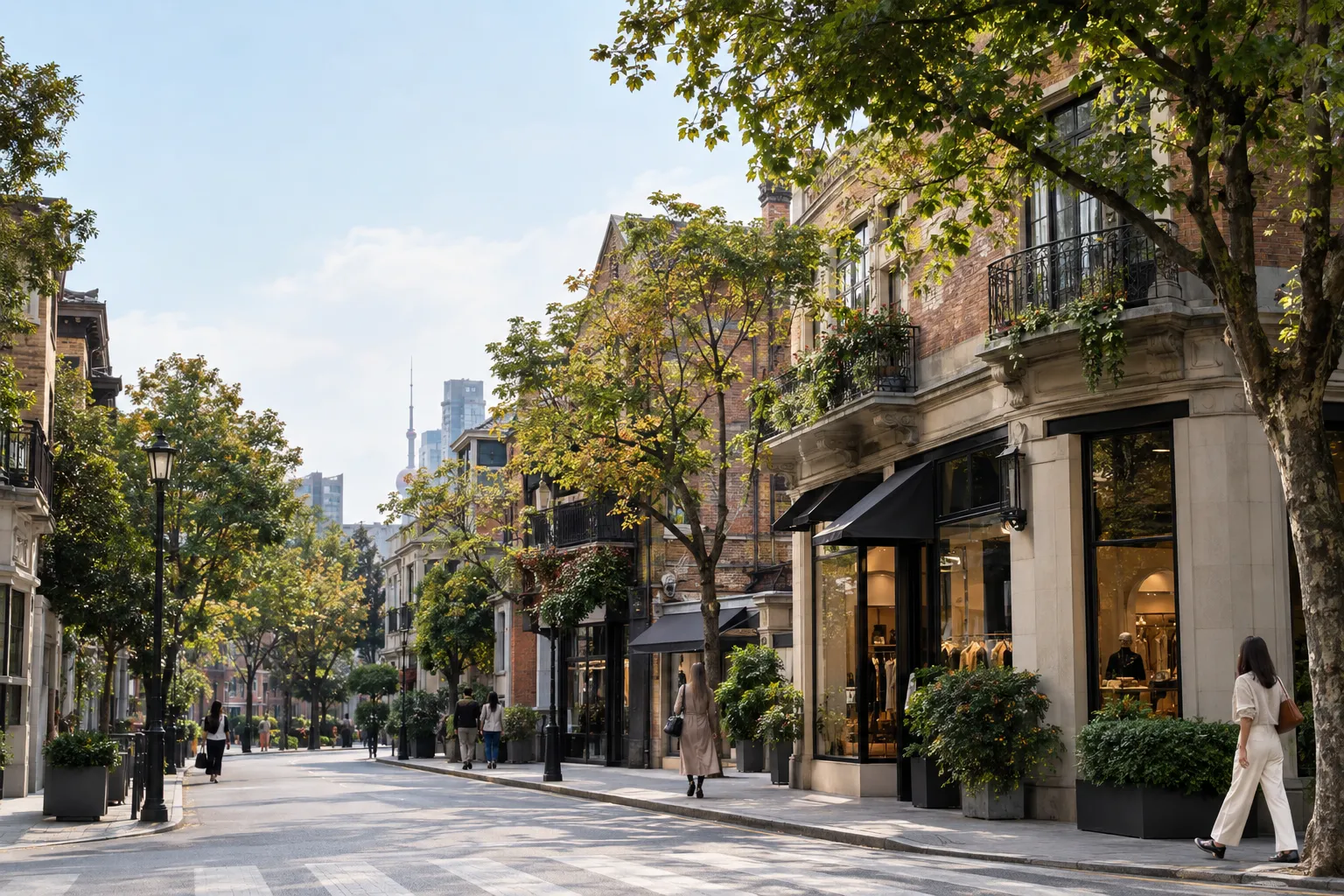
Explore Shanghai’s distinct fashion districts, from major shopping streets to historic lanes, and find a personal style perspective shaped by the city’s architecture, retail and neighbourhood life.
At a glance
Choose Huaihai Road for a broad retail experience and Wukang–Anfu for a slower neighbourhood browse.
Visit Xintiandi or Tianzifang to see shopping and creative activity in historic settings, and Nanjing Road for a major shopping-street perspective.
- A broad retail and lifestyle district
- Huaihai Road
- Neighbourhood streets with fashion and beauty retail
- Wukang–Anfu
- Contemporary commercial life in restored Shikumen buildings
- Xintiandi
- Historic lanes with art studios and creative shops
- Tianzifang
Fashion districts and personal style in Shanghai
Shanghai’s shopping districts are not one continuous fashion quarter. Each offers a different balance of scale, architecture, retail and street life, making the city especially rewarding for visitors interested in style as culture.
Reading Shanghai through its fashion districts
Shanghai rewards the visitor who treats fashion as a way of reading the city, rather than as a checklist of shops. Its retail landscape shifts markedly from one area to another: broad commercial streets invite a deliberate browse, while quieter neighbourhood roads encourage unplanned discoveries. In some places, fashion shares the frame with historic buildings; elsewhere, it appears in the rhythm of cafés, small boutiques and everyday street life.
That variety makes personal style in Shanghai an exercise in observation. The city does not prescribe one silhouette or uniform. Instead, it offers different settings in which clothes can feel formal, expressive, practical or understated. A considered visit means leaving room for that contrast: browsing a major shopping thoroughfare, walking a historic district and spending time in a neighbourhood whose shops are woven into the street itself.
The useful question is not simply where to shop, but what kind of encounter you want. Are you looking for established retail and a concentrated range of stores, a neighbourhood atmosphere, design-led browsing, or architecture that adds context to the experience? Shanghai’s districts make those different intentions legible. Moving between them can turn a shopping day into a more nuanced account of the city’s changing identity.
Choose the mood before choosing the shops
For a first visit, choose one area as an anchor and let the rest of the day respond to it. An itinerary built around every famous shopping street can become tiring and shallow; a slower route offers more time to notice how the scale of the street, the age of its buildings and the kinds of shops shape the mood. Districts are not interchangeable retail zones. Their differences are part of the subject.
- For a broad, established shopping-street experience, begin with Nanjing Road.
- For fashion and lifestyle retail within a central urban setting, consider Huaihai Road.
- For a neighbourhood walk with independent-feeling retail and historic streetscapes, explore Wukang Road and Anfu Road.
- For a heritage setting adapted to contemporary commercial and cultural uses, look at Xintiandi.
- For narrow lanes, creative businesses and old-Shanghai character, consider Tianzifang.
Huaihai Road and the art of considered browsing
Huaihai Road suits visitors who want to encounter fashion as part of a larger retail landscape, with the freedom to move between prominent destinations and more personal discoveries.
Huaihai Road: a broad view of contemporary retail
Huaihai Road belongs to Shanghai’s larger retail vocabulary: a major urban corridor where established shopping destinations meet fashion, lifestyle and cultural spaces. The official city guide presents it as an area with a varied mix, rather than a single-purpose strip. That range is useful to visitors who want a substantial retail outing but do not want the experience to be limited to one kind of shop.
The pleasure of a broad shopping road lies partly in its scale. You can move between prominent commercial addresses and smaller discoveries, then pause to consider how the city’s retail identity is changing. Official Shanghai coverage has noted overseas visitors seeking Chinese-designed clothing, footwear and accessories in the area. That is a reason to browse with curiosity, not a guarantee that a particular label or item will be available on the day.
For personal style, Huaihai Road is a useful place to compare ideas. Rather than looking for a single “Shanghai look”, notice how different brands handle proportion, colour, material and styling. A garment that feels striking on a display can be assessed against the realities of your wardrobe: what you already wear, how it will travel home and whether it works beyond the photograph. The district can support an informed browse, but the final measure of a purchase is its usefulness to you.
How to browse Huaihai Road with intention
Give the area enough time to be more than a sequence of entrances. Decide whether you are browsing for ideas, looking for a specific category or hoping to discover Chinese-designed pieces. Keep those goals distinct: inspiration can come from windows and styling, while a purchase requires checking fit, care instructions and the details of the item. Store line-ups and individual offers change, so verify current information through the relevant shop or official district guidance when a particular stop matters.
- Look for differences in cut and styling instead of treating every trend as a shopping instruction.
- Check garment construction and care information before buying.
- Allow time for a pause between stores; a slower pace makes it easier to compare what you have seen.
- Confirm current store details if you are planning around a specific destination.
Wukang Road and Anfu Road: style on a human scale
Wukang Road and Anfu Road offer a different register from the city’s larger retail corridors: a walkable setting where historic streets, fashion and everyday neighbourhood life meet.
Wukang–Anfu: fashion at neighbourhood pace
The Wukang–Anfu area offers a more intimate street-level experience. Shanghai’s official visitor coverage describes fashion and beauty retailers among the area’s mix, set against historic streets and architecture. Here, the walk itself becomes part of the visit: shopfronts, façades and the pattern of local activity provide context for what you see in the windows.
This neighbourhood setting changes the pace of fashion discovery. Instead of concentrating on a single large retail destination, visitors can look for a shop that catches the eye, take in the street and continue on foot. The appeal is not that every boutique is a hidden gem; that is neither a reliable promise nor the point. The value lies in seeing retail within a lived urban environment, where style feels connected to the character of the neighbourhood.
For a personal-style visit, approach the area as a place to gather ideas. Notice how an outfit relates to its surroundings: relaxed or precise, subtle or expressive, layered or pared back. Take photographs only where appropriate and be considerate of residents and other pedestrians. If you find a piece that seems distinctive, assess it on its own merits rather than assuming that local provenance automatically makes it right for you.
Make room for discovery
A useful route is intentionally loose: choose a starting point, walk with attention, and stop when a shop or detail genuinely interests you. Avoid planning every minute around a list of named retailers, since businesses and opening arrangements can change. Before setting out for a particular store, check the latest official or shop information. Comfortable footwear and a bag that leaves your hands free make a leisurely street visit more practical.
- Treat the district as a walk as well as a shopping destination.
- Use façades and street details as context, not merely as a backdrop for photographs.
- Check current shop information if a specific boutique is central to your plans.
- Keep purchases selective so that what you bring home reflects your own wardrobe.
Heritage settings, contemporary style
Xintiandi and Tianzifang bring shopping into closer contact with Shanghai’s historic urban character, but in different ways and at different scales.
Xintiandi: contemporary life within Shikumen architecture
Shanghai’s historic fabric is not separate from its contemporary retail culture. Xintiandi is a prominent example: the official city description identifies its restored Shikumen architecture and the adaptation of those buildings for modern commercial use. The result gives a visitor a visible conversation between older urban forms and current leisure, retail and cultural activity.
That setting invites a particular kind of attention. Look at how entrances, courtyards and street-facing façades influence the experience of moving between businesses. The contrast between old and new can make a visit feel carefully composed, but it is worth distinguishing the district’s architectural story from the age of any individual shop. Xintiandi is a contemporary destination within a historic architectural context, not a preserved period street untouched by change.
Fashion here can be encountered as part of a wider lifestyle scene. Shanghai’s official heritage-zone information notes fashion shows and boutique markets among the area’s events, alongside cultural and lifestyle activity. Events and programming vary, so check current announcements rather than assuming a market or show will coincide with your visit. Even without a scheduled event, the district’s built environment offers a thoughtful setting for noticing how style and urban heritage can coexist.
Tianzifang: creative commerce in the lanes
Tianzifang offers another relationship between creative commerce and older urban character. Official Shanghai visitor information describes preserved historic buildings, art studios and a creative atmosphere, with cultural shops and boutiques adding to the area’s identity. Its lane-based character makes it a contrast to the open scale of major shopping roads.
This is a place to browse carefully and keep expectations flexible. Small shops and creative spaces can change, and the experience depends on what is open and active during your visit. Rather than expecting a uniform retail offer, take time to explore the lanes, notice the mix of businesses and choose only the stops that interest you. The appeal is as much the texture of the setting as any individual purchase.
From Nanjing Road to a neighbourhood walk
The strongest fashion itinerary is selective. Shanghai’s districts reward comparison, but a measured route is more useful than trying to cover every notable shopping area in one day.
Nanjing Road: the grand shopping-street perspective
Nanjing Road offers a useful counterpoint to smaller neighbourhood districts. Shanghai’s official destination guide describes it as a major shopping street, with traditional department stores, current fashions and night views. Its broad visibility and concentrated commercial character make it a natural choice for visitors who want to experience one of the city’s best-known shopping environments.
A large retail street can feel less intimate than a lane or neighbourhood road, but it provides its own kind of insight. Department-store traditions and contemporary fashion sit within a public, metropolitan setting. The experience is not solely about the contents of a shopping bag: the scale, movement and changing light are part of what makes the visit memorable.
Consider going with a clear intention. You might be comparing department-store retail with independent browsing elsewhere, looking for a general overview of the city’s commercial energy, or simply taking in the street. Do not expect every stop to be a quiet boutique experience. In busy public areas, keep belongings secure, be patient in crowded sections and allow extra time to move at a comfortable pace.
Build a day around contrast, not distance covered
A balanced fashion itinerary does not need to include every district. Combine one major shopping street with one neighbourhood area, then decide whether you want the architectural contrast of Xintiandi or the creative-lane atmosphere of Tianzifang. Shanghai’s official Huangpu shopping-and-dining guide demonstrates the value of grouping nearby experiences into a district-based day, although it does not imply that transport or a guided service is included.
Because this article is intended for international visitors, practical movement between districts deserves some thought. Plan the day around current conditions and the locations you actually choose; check up-to-date local travel guidance and official venue information before departure. UK Direct Chauffeurs is a London-based operator, and its confirmed services do not establish transport availability in Shanghai, so this guide does not recommend it for local journeys. For this trip, consult current local transport information and make arrangements through appropriate local channels.
- Pair one large-scale retail area with one smaller neighbourhood district.
- Leave an open interval for a meal or rest rather than packing the day with stops.
- Verify current opening arrangements and event details before travelling to a specific shop or venue.
- Review current local transport and travel guidance independently of retail recommendations.
Personal style: observe, edit and make it your own
A visit can influence how you dress without turning personal style into a costume. Use the city’s variety as a prompt to look closely, make selective choices and remain comfortable.
Buy for your own wardrobe, not a borrowed image
Personal style is not a souvenir category. The most useful way to approach shopping in Shanghai is to treat local retail as an opportunity to refine your eye: notice a proportion you had not considered, compare the way different labels use fabric, or see how a familiar item is styled in another context. Inspiration does not require a purchase.
If you are considering buying clothing or accessories, pause to ask whether the item suits the way you dress at home. Try to judge fit in natural movement, inspect seams and fastenings, and check care instructions. Confirm the price and the shop’s own exchange or return terms before paying; these details are set by individual retailers and should not be assumed. Keep receipts and any product information you may need after the trip.
A thoughtful wardrobe addition is often more memorable than an impulsive haul. Consider whether an item works with pieces you already own, whether it is comfortable enough to wear, and whether it will be practical to pack. If you are shopping for someone else, be especially cautious about sizing and personal preferences. The objective is not to copy a street-style image but to bring home something that feels convincingly yours.
- Check fit, construction, material and care details rather than relying on a display impression.
- Ask the retailer to clarify its current payment, exchange and return terms.
- Consider whether a garment works with what you already own and how you live.
- Treat inspiration and buying as separate choices; browsing can be valuable on its own.
Dress for the day you are actually taking
Style also has a practical dimension. A day that moves between a large shopping street, open-air lanes and historic districts calls for clothes that are comfortable across different settings. Choose footwear suited to extended walking and consider carrying a light layer if your plans include indoor and outdoor stops. The right choice depends on the season and forecast, so check conditions close to your visit rather than relying on a general packing formula.
Respect for place matters too. Historic neighbourhoods are not simply scenery; they are part of the city’s lived environment. Keep pathways clear, be considerate when taking photographs and follow any posted guidance at shops, galleries or public spaces. These small habits make a fashion-focused visit more attentive and less extractive.
Let the city sharpen your eye
Shanghai offers no single formula for dressing well. Its districts instead provide settings in which to observe, compare and develop a point of view of your own.
A considered conclusion
Shanghai’s fashion districts are most revealing when seen together, but they do not need to be compressed into one hurried circuit. Huaihai Road offers a broad retail perspective; Wukang–Anfu makes fashion part of a neighbourhood walk; Xintiandi and Tianzifang put commerce in conversation with historic character; Nanjing Road shows the scale and visibility of a major shopping street.
The best choice depends on what you want from the day. If you want to compare retail formats, pair a large-scale street with a smaller district. If architecture is central to your interest, allow time for Xintiandi or Tianzifang. If you are looking for personal inspiration, slow down enough to notice how garments are presented and how people adapt style to the city around them.
The result need not be a dramatic transformation or a bag full of purchases. A more lasting souvenir may be a sharper sense of what you like: a silhouette, a colour combination, a way of wearing familiar pieces, or a new understanding of how fashion belongs to a place. In Shanghai, personal style is best approached as an ongoing conversation between the individual and the city.
- Choose districts by the kind of experience you want, not by the number of stops you can collect.
- Verify current shop, event and access information before making a specific venue the centre of your day.
- Let the city inform your taste without treating any one district as a definition of Shanghai style.
Take away an idea, not an obligation
What stays with a visitor is often the contrast: the movement of a major shopping street, the details of a historic façade, the quieter rhythm of a neighbourhood shop. Give those differences room. A deliberate pace will make the districts easier to understand and leave your own point of view intact.
fashion districts in Shanghai FAQs
Which Shanghai district is best for fashion shopping?
It depends on the experience you want. Huaihai Road offers a broad retail setting, Wukang–Anfu a neighbourhood walk, Nanjing Road a major shopping street, and Xintiandi or Tianzifang a stronger historic or creative context.
Where can I see fashion alongside historic architecture?
Xintiandi places contemporary commercial activity within restored Shikumen architecture. Tianzifang is known for historic buildings, art studios and creative shops. Check current information before visiting specific businesses.
Can I find Chinese-designed fashion in Shanghai?
Official Shanghai coverage has described visitors seeking Chinese-designed clothing, footwear and accessories around Huaihai Road. Individual retailers and available products can change, so verify current details locally.
How should I plan a fashion-focused day in Shanghai?
Choose one larger retail area and one neighbourhood district, allow time for a break, and check current shop, event and local travel information before setting out.
Sources and references
See Shanghai through your own sense of style
Explore Shanghai at your own pace Related information and services: Hourly Chauffeur, Our Full Chauffeur Services Overview, Event Chauffeur Hire Across The Uk, London City Airport Chauffeur Service.
Article reviewed and updated October 23, 2026.
UK Direct Chauffeurs