Craftsmanship and independent design in Windsor
Windsor’s design character is not confined to royal interiors. It also lives in independent shops, locally made objects and the details of the town’s historic streets. Follow those connections and craftsmanship becomes a way to experience Windsor more attentively.
In brief
Windsor’s independent design scene includes local makers and specialist retailers, with Craft Coop presenting locally made work across several disciplines.
Historic interiors and civic architecture offer a separate, complementary perspective on craftsmanship and design in the town.
- Visit Windsor says many Craft Coop products are made within this distance.
- 15 miles
- The year Visit Windsor associates with the largely existing structure of Windsor Guildhall.
- 1691
- Craft Coop categories listed by Visit Windsor.
- Art, ceramics, jewellery, textiles and homewares
- Royal Collection Trust advises that Windsor Castle may have short-notice access changes or closures.
- Working royal palace
Craftsmanship and independent design in Windsor
Windsor’s design story extends beyond its celebrated heritage. It can be found in the relationship between historic interiors, independent retail and the objects made or chosen for contemporary life.
Reading Windsor through craft and design
Windsor is often approached through its royal history, but its character is also legible in the things made, selected and sold here. Independent design appears on a smaller scale than the castle: in a piece of jewellery, a carefully chosen fragrance, a hand-finished ceramic or a textile whose irregularities show the maker’s touch. These objects offer another way of reading the town, one grounded in material and use rather than ceremony alone.
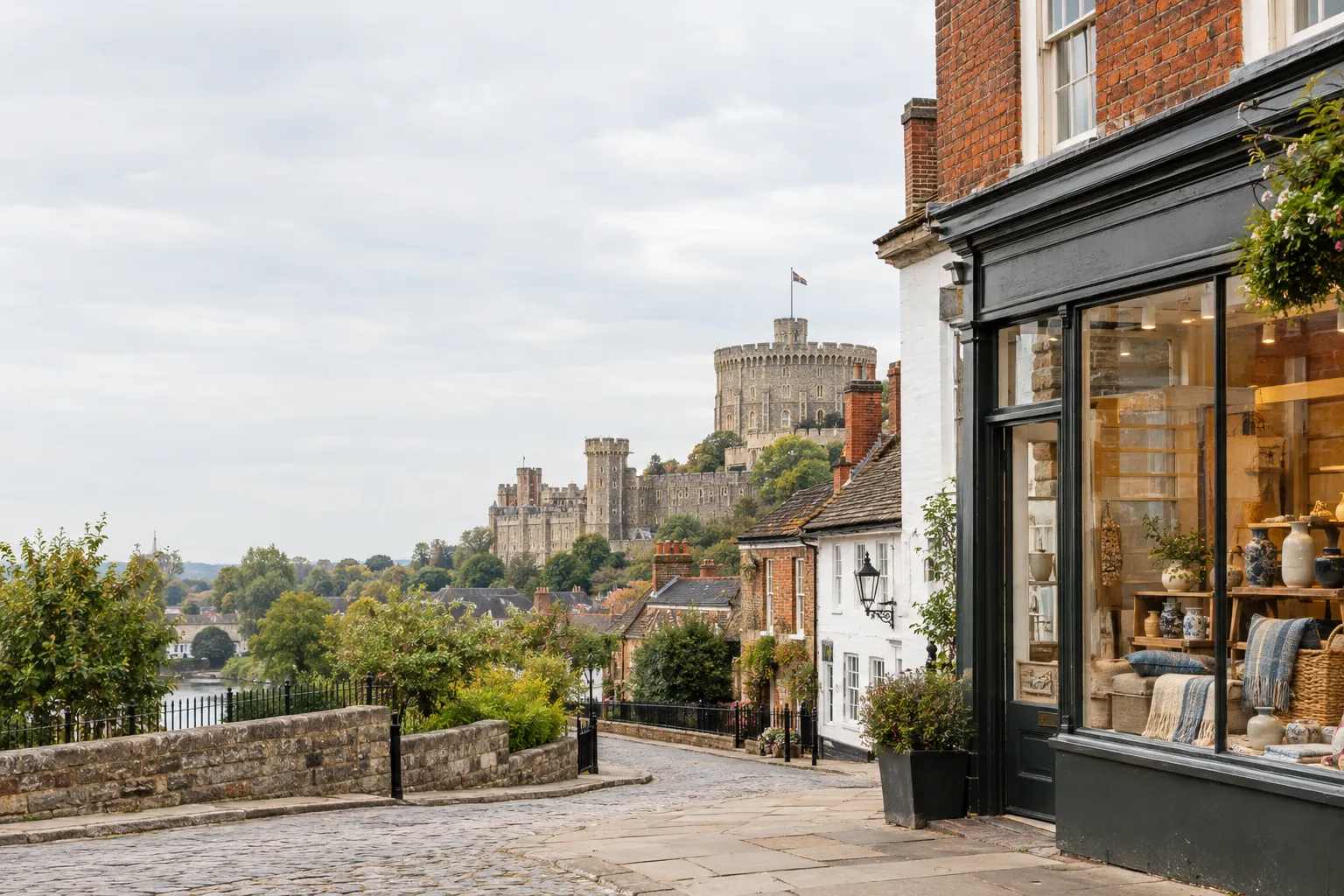
The contrast is part of the appeal. A visitor can move from streets shaped by centuries of royal and civic history to contemporary retail spaces where individual makers and specialist shopkeepers curate a different kind of experience. The two are not competing narratives. Historic buildings remind us that craft is embedded in the built environment; independent shops show that making and choosing objects remain part of everyday culture.
What independent design means in practice
Craftsmanship is not simply a synonym for luxury or ornament. It describes attention to materials, process, proportion and finish, whether the result is a useful domestic object or a decorative work. Independent design adds another layer: decisions are made by identifiable makers or small specialist businesses rather than being obscured by a standardised product range. The distinction is useful for browsing, because it shifts the question from “Is this expensive?” to “What is this made of, how was it made, and what makes it particular?”
In Windsor, the answers vary. Some encounters are explicitly handmade; others involve thoughtful selection, specialist knowledge or a distinctive point of view. A useful guide therefore does not claim that every independent shop sells locally produced work. Instead, it looks for reliable descriptions of provenance and technique and treats each object on its own terms.
Where to encounter independent design in Windsor
Windsor’s independent retail scene offers different kinds of contact with design: direct encounters with locally made work and specialist shops that curate products with a distinct point of view.
Local making at Craft Coop
Craft Coop is one clear place to begin. Visit Windsor describes it as a shop and gallery in Windsor Royal’s Yards Shopping, bringing together work by local makers across categories that include candles, textiles, homewares, jewellery, art and ceramics. The listing says many products are made within 15 miles. That detail gives the shop a tangible connection to its surroundings, while the mix of disciplines makes it useful for seeing how varied the idea of local craft can be.
Rather than treating the shop as a checklist of souvenirs, browse by material and process. Notice the weight and surface of a ceramic piece, the weave and finish of a textile, or the way a maker has balanced function with decoration. Read labels for information about the maker and place of production. When provenance matters to a purchase, ask whether an item was made by the named artist, produced locally, or selected from a wider source. Those distinctions are not a reason to dismiss an object; they help explain what kind of independent design it represents.
- Look for the maker’s name and any description of materials or production.
- Compare objects within one discipline, such as ceramics or textiles, rather than judging by price alone.
- Ask about care and intended use before buying a piece that will be handled or displayed regularly.
Independent shops as design editors
The broader independent-shopping picture includes family-run and specialist businesses. Visit Windsor’s guide identifies examples such as House Windsor and Dot Perfume Gallery alongside local makers. A specialist retailer may contribute to independent design through selection and expertise even when the goods are not all made locally. A fragrance shop, for instance, invites a visitor to consider composition and sensory character; a carefully edited home or gift shop presents a point of view through the objects it chooses to place together.
This is a more nuanced picture than equating independence with hand production. Makers create objects; retailers interpret and connect those objects to customers; galleries can provide a setting in which different practices are encountered together. On a short visit, the quality of the encounter may lie in conversation and considered selection as much as in seeing a workshop. Keep those categories distinct, and the town’s design culture becomes easier to understand rather than being reduced to a single claim of “made in Windsor.”
Windsor Castle and the craft of interiors
The castle provides a substantial historic counterpoint to Windsor’s present-day independent shops. Its rooms reward close attention to the joining of architecture, decoration and furnishing.
The castle as a record of changing design
Windsor Castle offers a different scale of craftsmanship. Royal Collection Trust describes a building altered and developed over successive periods, rather than a single, unchanging design. The State Apartments and other interiors bring together architecture, carved and painted decoration, furnishings and works of art. Their effect depends on the relationship between these elements: surface, colour, object and room are composed to communicate meaning as well as to serve a practical purpose.
The castle’s history is also a reminder that heritage design is made through repeated acts of building, furnishing, repair and reinterpretation. A room can preserve evidence of changing taste while continuing to function as part of a working royal palace. This perspective helps visitors see beyond the most obvious decorative feature. Look at how a doorway frames a room, how painted surfaces meet carved elements, and how furniture relates to the scale of the interior. Such details make craftsmanship visible as coordinated labour rather than isolated ornament.
Interiors, objects and the work of interpretation
The Royal Collection’s account of furnishing Windsor Castle is a useful companion to a visit because it directs attention to the objects and decisions that make an interior coherent. Furniture is not merely a collection of attractive pieces: placement, material, use and association contribute to the character of a room. Likewise, carved or painted details make more sense when considered in relation to the wider architectural setting.
Visitors should keep the distinction between historic craftsmanship and current independent design in view. The castle is not a contemporary makers’ marketplace, and its royal interiors do not tell the whole story of local production. Their value here is interpretive. They offer a long view of design as skilled making shaped by patronage, function and changing taste. Independent shops then bring the subject back to daily life, where objects are chosen, handled and used in more personal ways.
- Look for relationships between decoration, furniture and the architecture of a room.
- Consider how an object’s intended use shapes its materials and form.
- Separate what you can observe from assumptions about who made an item or when.
Civic architecture and the details of a Windsor walk
Historic Windsor is not only something to visit; it is also a setting to observe. The Guildhall illustrates both the richness of that setting and the importance of reliable attribution.
The Guildhall and the value of careful attribution
The Windsor Guildhall offers another way to read the town’s architecture. Visit Windsor’s history account describes the building as largely dating from 1691 and names Sir Thomas Fitz as its designer. It also notes that the often-repeated attribution to Christopher Wren is not supported by clear evidence. That qualification matters: attractive stories can travel easily, but sound design history depends on separating documented information from tradition.
For a visitor interested in craftsmanship, the Guildhall is a prompt to look at civic architecture as well as royal interiors. Consider its scale and public purpose, and the way a historic building participates in the character of a town centre. The wider lesson applies to objects in shops too. A confident account of design does not need a famous name attached to every detail; it is stronger when it is precise about what is known and honest about what remains uncertain.
Architecture as part of the everyday design scene
A design-minded walk does not require access to every interior. Streetscapes, thresholds, shop windows and the contrast between old fabric and contemporary displays can all be observed in public space. Pay attention to proportion, materials and the way a shop presents its contents. A restrained display may make an object’s form easier to read; a grouping of varied materials can show how a retailer builds a visual conversation.
The town’s heritage should not be treated as a decorative backdrop detached from present-day life. Independent commerce takes place within that setting, and the experience of browsing is shaped by the scale and rhythm of the streets. At the same time, a historic building’s appearance does not prove that a nearby business has a special connection to it. Keep observation separate from inference, and a walk through Windsor becomes both more accurate and more rewarding.
- Notice how shop displays use light, spacing and grouping to communicate a point of view.
- Compare the materials and proportions of historic façades with contemporary retail interiors.
- Check the current visitor information before planning access to a building’s interior.
Planning a craftsmanship-focused visit to Windsor
Opening hours, visitor access and temporary arrangements can change. A flexible plan, grounded in official information, makes it easier to give the town’s design details proper attention.
- Plan a design-led visit with current information
A balanced day can connect independent shopping with architectural observation without trying to cover everything. Begin with the Visit Windsor listing for Craft Coop and check its current opening information before setting out. The listing places the shop in Windsor Royal’s Yards Shopping and describes it as a short walk from either Windsor station; confirm details against the latest local information rather than relying on an old itinerary. Browse slowly, then use the surrounding streets to notice how the contemporary retail environment sits within the town’s historic fabric.
If visiting Windsor Castle is part of the plan, check Royal Collection Trust’s practical information on the day you intend to go. The castle is a working royal palace, and visitor arrangements or access can change, including short-notice closures. Treat a castle visit as a separately planned element rather than assuming every room will be open. The same principle applies to the Guildhall: consult its current visitor information before making it a fixed stop. This approach leaves room for discovery while reducing the risk of building a day around outdated details.
- Verify shop opening information with the current Visit Windsor listing.
- Check Windsor Castle’s official visitor page for access arrangements and possible closures.
- Confirm whether the Guildhall’s museum or tours are operating before travelling.
- Allow time for browsing and walking instead of packing the visit with fixed stops.
- A considered route from shopfront to historic interior
A practical design itinerary can be simple: start with one independent shop, identify a material or discipline that interests you, then carry that question into the town’s architecture and historic interiors. If ceramics catch your eye, notice how shape and surface function in both contemporary objects and historic rooms. If you are drawn to textiles, consider how pattern and texture contribute to atmosphere. This is not a claim that the objects share a maker or origin; it is a way to build a more attentive visit around a theme.
For travellers arriving from elsewhere in the UK, transport planning can be kept separate from the editorial experience. UK Direct Chauffeurs provides pre-booked chauffeur transport across London and the United Kingdom, including Windsor, according to the supplied company information. It may be relevant for a visitor who needs private transport as part of a wider itinerary, but it has no special relationship with Windsor’s shops, castle or Guildhall. The town’s design story is best explored on its own terms.
Looking closely at Windsor’s independent design
Whether you intend to buy or simply browse, a few practical questions help distinguish material quality, maker information and personal fit from vague claims.
How to browse with a maker’s perspective
The most satisfying way to shop for independent design is to be curious without demanding that every object fit a single story. Ask who made it, where it was made, what materials were used and how it should be cared for. A shop may have clear answers for some pieces and less detailed information for others. That is a reason to make an informed choice, not to assume a provenance that has not been established.
Think about the object’s life after purchase. Will it be used every day, displayed, worn or given as a gift? Does its finish suit that purpose? Is the scale right for the space or the person? These questions bring craftsmanship down from an abstract ideal to practical judgement. They also encourage appreciation of repairability, durability and usefulness alongside visual appeal, without assuming that any single material or process is automatically sustainable.
- Ask about the maker and production location where provenance is important to you.
- Check care instructions and suitability for the way you intend to use the object.
- Choose for lasting usefulness and personal meaning, not only for a label or display.
Choosing objects with care and context
A thoughtful purchase need not be large. A small piece can carry a strong sense of material, colour or technique, while a larger object may make more sense when its function and provenance are clear. Independent shops are particularly rewarding when visitors take time to compare, ask questions and listen to the explanation behind a work. That exchange can reveal distinctions that a photograph or price tag cannot.
For those who are simply looking, the same habits still matter. Notice how a product is finished, how it sits beside other objects and whether its design communicates its purpose. In historic interiors, apply a similar attention to the relationship between surfaces and use, while remembering that the stories attached to heritage objects require dependable sources. The common thread is close observation rather than a presumption that age, cost or a famous name alone makes something well designed.
The enduring appeal of craftsmanship and independent design in Windsor
Craftsmanship and independent design in Windsor are best understood through attention: to makers, materials, history and the details of everyday places.
A design story made of different layers
Windsor’s particular strength as a design destination lies in the coexistence of different scales and purposes. A historic royal interior embodies design shaped by centuries of use, alteration and collecting. The Guildhall gives the civic town its own architectural point of reference. Independent retailers and makers bring the subject into the present, through objects intended to be encountered, handled and lived with. None of these experiences needs to stand in for the others.
That breadth makes it possible to leave with more than a purchase or a set of photographs. A visitor can acquire a sharper eye for materials, ask better questions about provenance and notice how design contributes to a place’s identity. The approach is deliberately unhurried: look closely, verify practical information and remain open to the difference between what is documented and what is merely assumed. Windsor’s craftsmanship is not one fixed style, but a conversation between making, place, history and everyday use.
A quieter way to experience Windsor
The most useful conclusion is also a simple invitation to observe. Start with an object in an independent shop, follow its materials and making as far as the available information allows, then look outward to the architecture around you. The details that remain may be modest: the finish of a ceramic surface, the arrangement of a display, the join between materials or the careful qualification of a historical claim. Taken together, they make Windsor legible not only as a royal town but as a place where design continues to be encountered in ordinary ways.
craftsmanship and independent design in Windsor FAQs
Where can I see locally made craft in Windsor?
Visit Windsor lists Craft Coop in Windsor Royal’s Yards Shopping, with locally made candles, textiles, homewares, jewellery, art and ceramics. Its listing says many products are made within 15 miles; check the current listing before visiting.
What should I look for when buying independent design?
Ask who made the piece, where it was made, what materials it uses and how it should be cared for. Distinguish verified maker and provenance information from assumptions.
Can Windsor Castle close or change visitor access?
Yes. Royal Collection Trust describes Windsor Castle as a working royal palace and advises that parts or all of it can close at short notice. Check its official visitor information before travelling.
Is Windsor Guildhall associated with Christopher Wren?
Visit Windsor’s history account says the commonly repeated Christopher Wren attribution is not supported by clear evidence. It identifies Sir Thomas Fitz as the designer of the largely 1691 structure.
Sources and references
Look closer at Windsor
Explore Windsor with an eye for the makers, materials and details that give the town its distinctive character. Related information and services: All Airports We Cover In London, Long Distance Chauffeur Service Across the UK.
Article reviewed and updated October 20, 2026.
UK Direct Chauffeurs